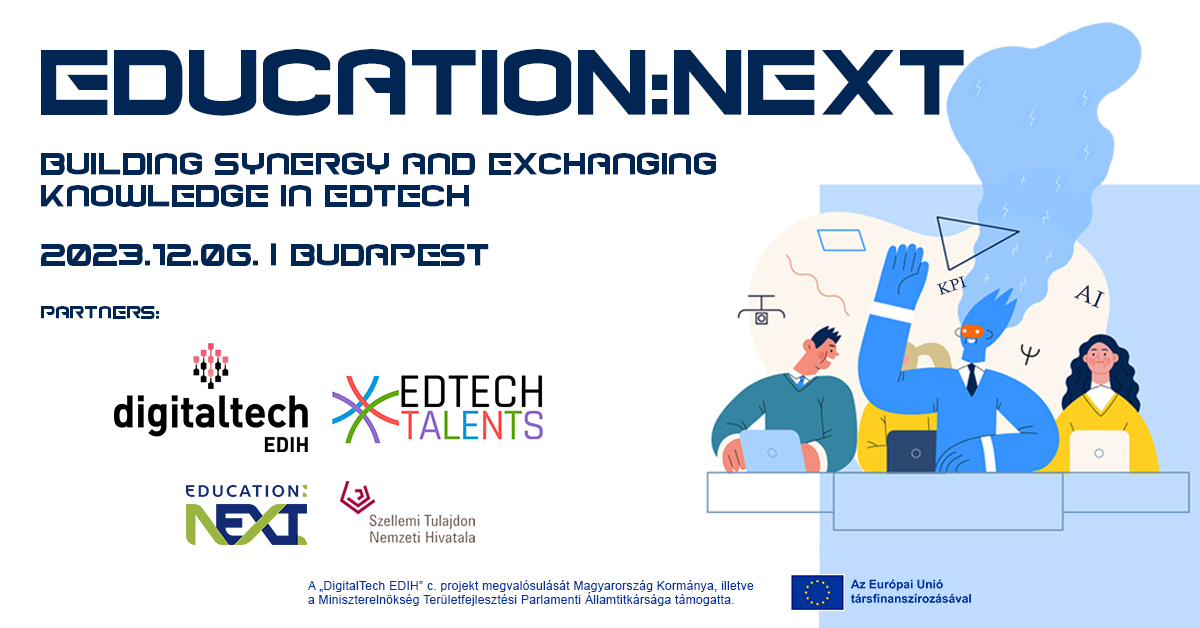
EDUCATION:NEXT – Building synergy and exchanging knowledge in EdTech Conference
arany.barna.dora2026-03-13T11:03:43+02:00On December 6, representatives of the Hungary STEM Platform attended the EdTech Conference, which focused on discussing the business, academic, and social potential inherent in educational technology, featuring international experts and enterprises.
The EDUCATION:NEXT conference is a gap-filling English-language platform that connects and encourages dialogue and action among open-minded stakeholders in the educational technology and education systems. This includes leaders of public and higher education institutions, experts, innovative educators, heads of innovative school networks, contributors to knowledge and experience centers, and the businesses themselves.
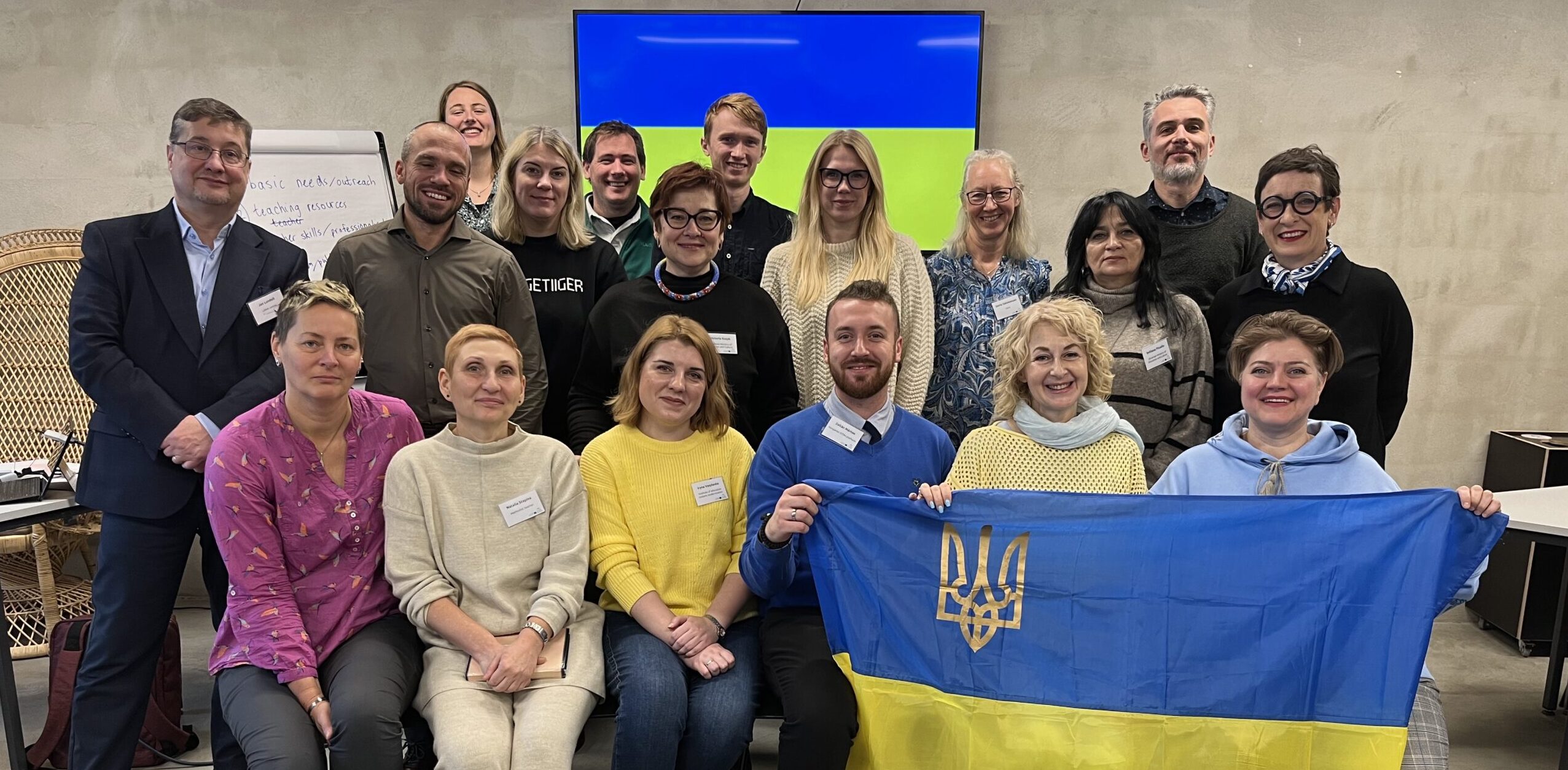
The panel discussion titled “The Future of EdTech Collaboration” provided important insights into how industry and academia can work together in the field of educational technology, with a special emphasis on the commercialization of knowledge. Key figures among the roundtable participants included Prof. Dr. Imre Felde representing Obuda University, Janika Leoste from Tallinn University, and Uglješa Marjanović from the University of Novi Sad.
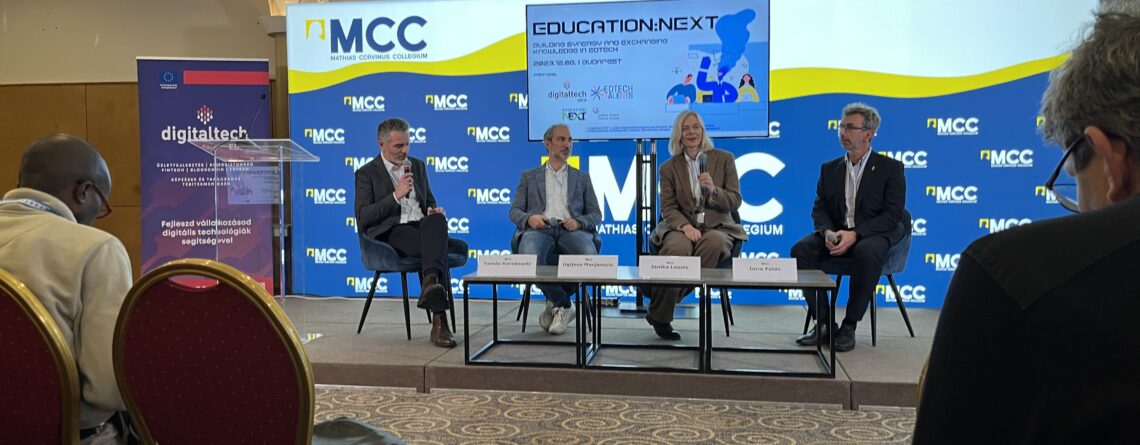
Prof. Dr. Imre Felde’s primary responsibility at Obuda University is coordinating industrial relations and supporting university engagement. To strengthen cooperation with the industrial and business sectors, he highlighted the importance of innovation and joint projects with industrial players, citing a virtual reality platform useful in both education and industry as an example.
Janika Leoste, representing Tallinn University, spoke about their collaboration programs that provide businesses with opportunities to connect with the university sphere and engage in product development. She drew attention to the importance of teacher training, emphasizing that industry and market needs are linked within education.
Uglješa Marjanović, from the University of Novi Sad, highlighted the importance of digital technologies in education, while also pointing out the necessity for teachers and professors to use these tools appropriately and effectively.
In the discussion moderated by Tamás Kersánszki, it was also noted that beyond acquiring digital skills and AI (Artificial Intelligence) literacy, significant progress is needed in education in other areas, such as robotics and human-computer interaction.
The panel participants emphasized the importance of closer ties between industry and academia and shared success stories of collaboration. Furthermore, they highlighted the role of academic researchers and developers in ensuring that the knowledge they create reaches the industrial sector in the form of services.
Overall, the panel discussion focused on how best to align industry and academia in the field of educational technology for the purpose of knowledge commercialization, while highlighting future opportunities and challenges for cooperation.
The event was realized through the cooperation of the EdTech Talents and DigitalTech EDIH projects, with the active support of the Hungarian EdTech ecosystem.