Think, Shape, Communicate: The “Invisible” Engine of the STEAM Excellence Program Concludes
arany.barna.dora2026-03-10T14:22:27+02:00Science does not end with laboratory experiments or running code. For a discovery to spark real change, one must understand the process of innovation, the methods of knowledge transfer, and the language of international communication. The latest talent profile of the STEAM Excellence Program placed exactly these “superpowers” into the hands of students.
During the Scientific thinking, innovation, and communication talent profile, participants traveled a path spanning from the future of education to the global market.
How will we learn tomorrow? – Pedagogical innovation
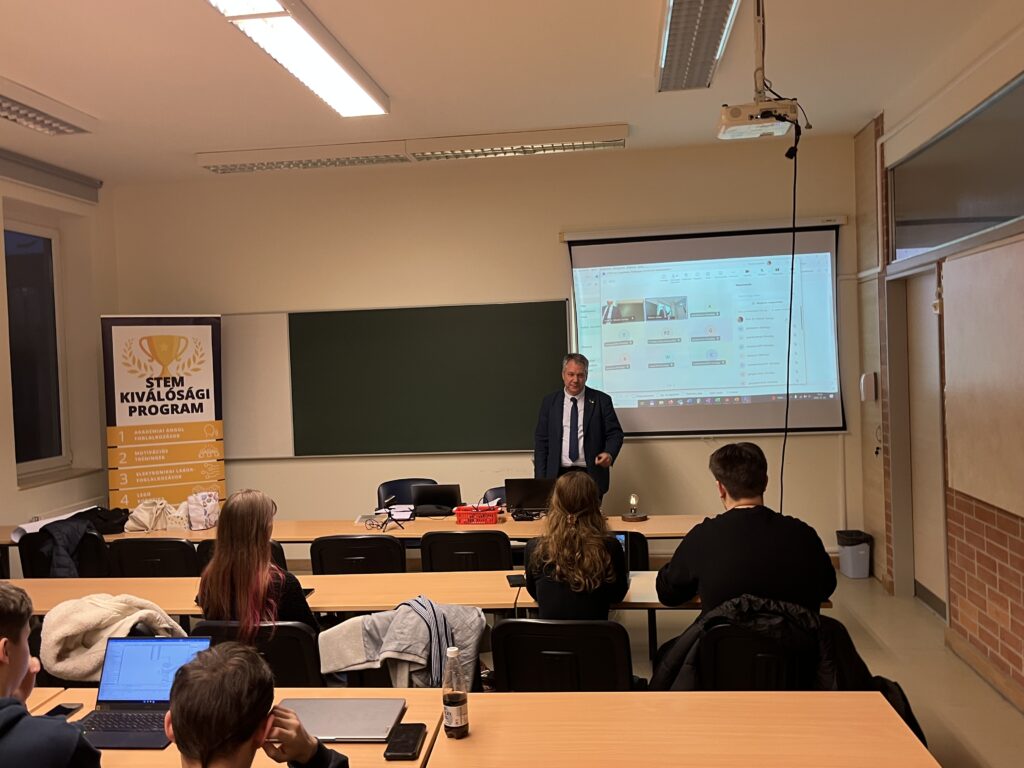
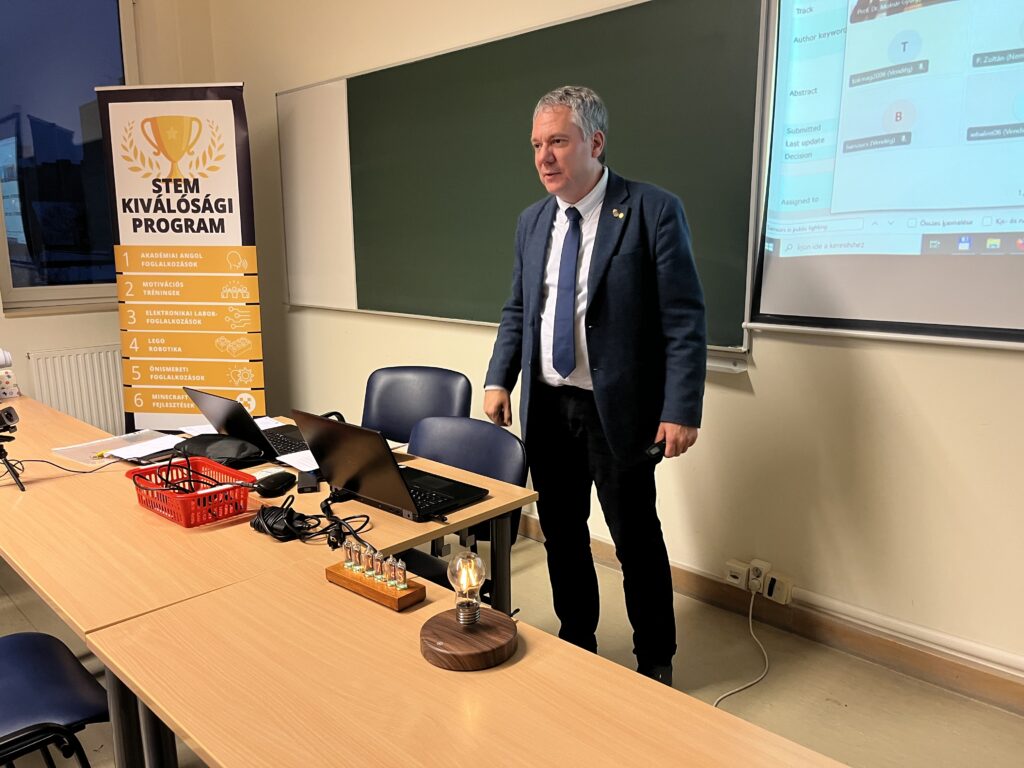
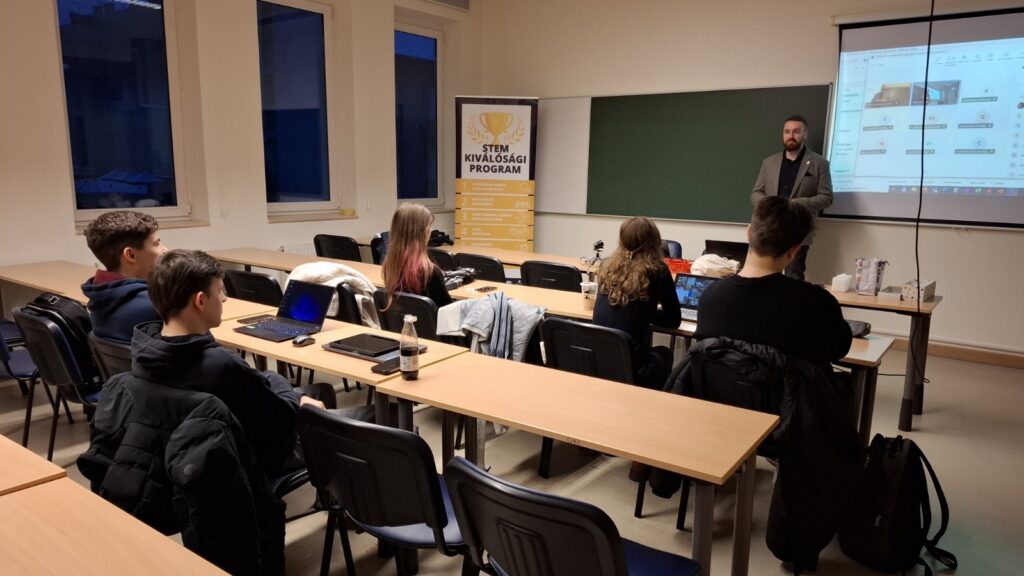
The module launched in early January with a focus on the future of learning. Led by Prof. Dr. György Molnár (Professor, Head of Teacher Training, and Department Head at the Kandó Kálmán Faculty of Electrical Engineering – Institute of Electrophysics, Ágoston Trefort Centre for Engineering Education) and Zoltán Márton (Head of the Óbuda University STEAM Office and the STEAM Excellence Program, Director of the Hungarian STEAM Platform), students acted not as passive listeners, but as educational researchers analyzing the impacts of digital culture.
ICT in Education: The focus was not just on devices, but on the shift in mindset that digitalization brings to knowledge sharing and transfer.
Critical Thinking: Through discussion forums and case studies, participants sought answers on how to filter true value from information noise.
Interactivity and Experience-based Pedagogy: Students were introduced to various interactive, quiz-based, and gamified digital platforms, enabling them to create and present highly visual and engaging demonstrations.
"Creative destruction" and the journey of ideas
A two-session course by Dr. habil. Zsombor Zrubka, MBA, Director General of the University Research and Innovation Center, provided insight into the world of innovation management. Here, students learned a vital lesson: a good idea is not yet an innovation.
“Innovation is the process through which an idea is transformed into social or economic value.”
The sessions covered:
Schumpeter’s Theory: Why “creative destruction” of old systems is necessary for progress.
Go-to-Market Strategy: How to build a Minimum Viable Product (MVP) and why continuous testing and learning are the keys to success.
Managing Uncertainty: How to mitigate risks during the development phase.
Science in English – Without borders
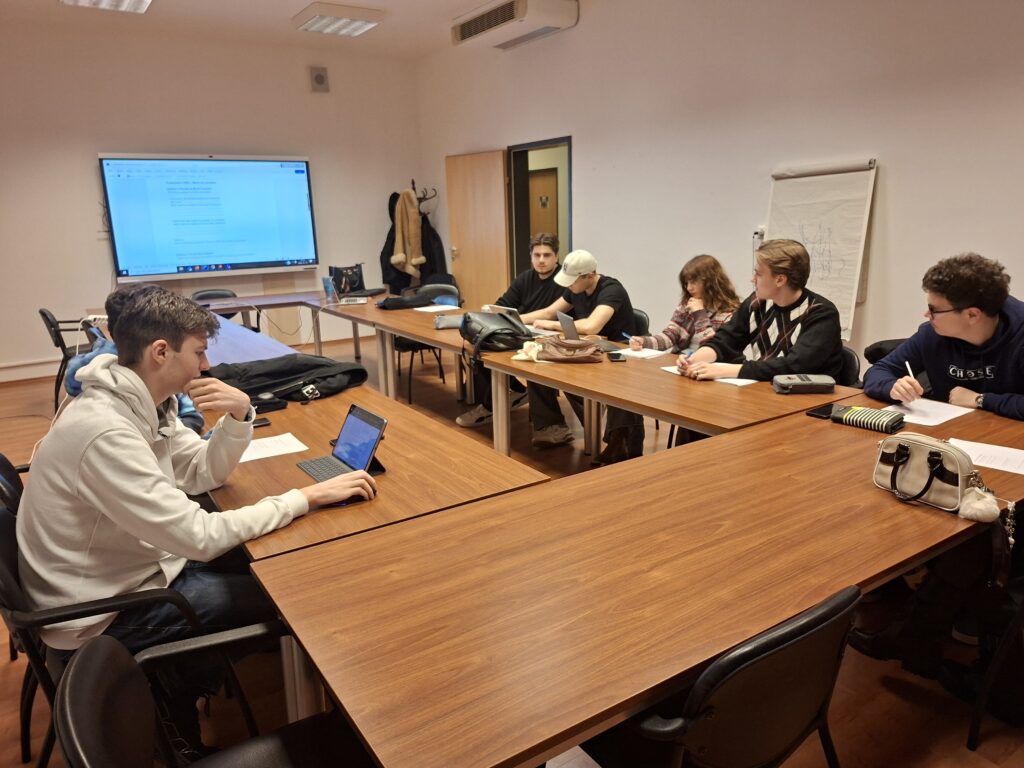
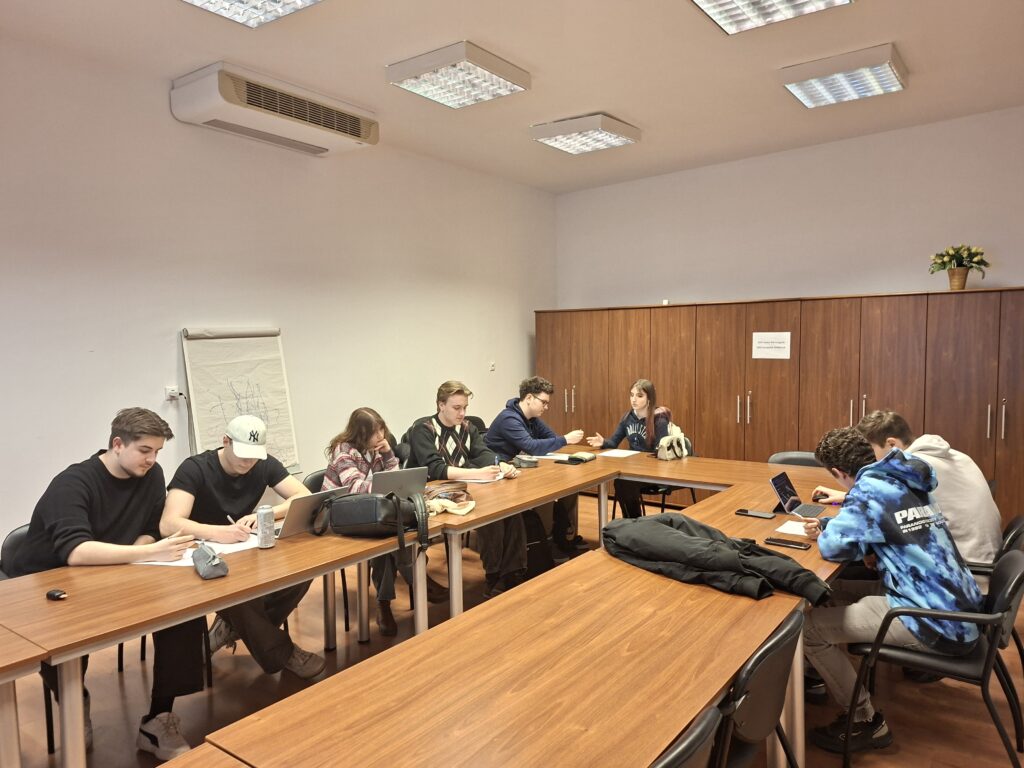
English is the language of science, but professional vocabulary alone is not enough. In a workshop led by Viktória Tafferner-Gulyás, an instructor at the John von Neumann Faculty of Informatics, students practiced how to convey their scientific results to both professional and lay audiences.
Presentation Techniques: How to construct an argument and use visuals for persuasion.
Academic English: Participants polished their speaking skills through interactive exercises to move confidently on the international stage.
Individual paths, great encounters
Once again, one of the most valuable parts of the profile was the individual consultation. Students had the opportunity to discuss their own projects and development directions personally with all the program’s mentors. This type of mentoring is what elevates the STEAM Excellence Program into a true workshop for talent cultivation.
A journey toward the future
These three weeks demonstrated that a modern researcher is simultaneously a strategist, a communicator, and an educator. The students now not only understand technology but also know how to talk about it, how to create value from it, and how to pass it on to others.
Congratulations to all scholarship recipients who successfully completed this complex module!
Our STEAM Excellence Program is funded by the National Talent Programme under the grant NTP-STEM-25-B-0006.