17Oct
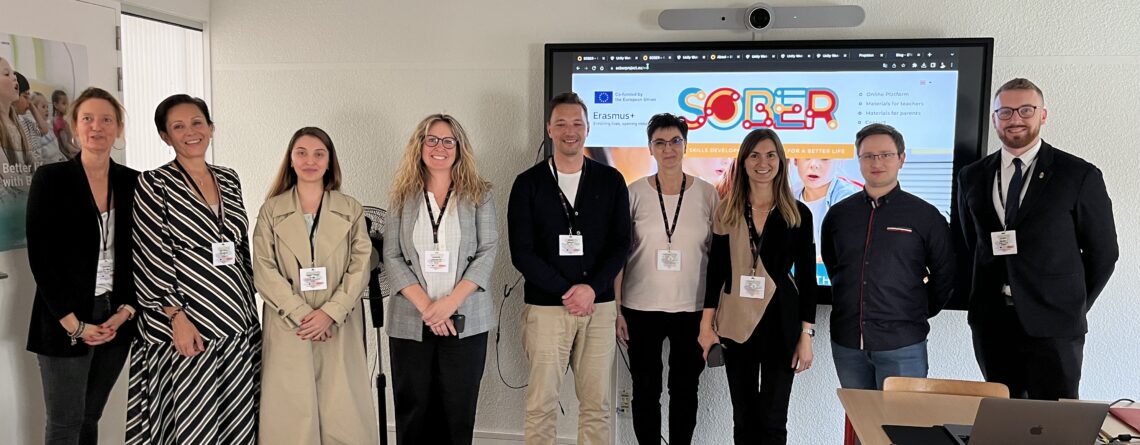
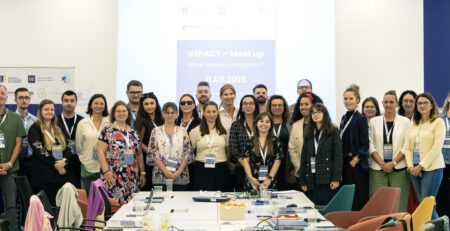
On October 11, 2023, our Erasmus+ project, which started in 2020, concluded with a final conference and project meeting in Brussels. Together with our consortium partners (Belgian, Polish, Hungarian, and Turkish), we presented the project’s results to education experts and teachers during the conference.
“We focused on creating a comprehensive development program and providing training for teachers and special educators, with a particular emphasis on developing basic and digital skills at ISCED levels 1-3, especially for disadvantaged students and those with Special Educational Needs (SEN) prone to early school leaving,” – shared Zoltán Márton, Project Coordinator.
The SOBER “Social Skills Development and STEM for a better life project” was implemented with the support of the European Union’s Erasmus+ program (implementation period ended on October 31, 2023).
The goal of the SOBER project was to create and implement a digital-based Complex Development Program, as well as to provide methodology and training for teachers and specialist teachers, focusing on developing the basic skills of disadvantaged children and those with Special Educational Needs (SEN).
The project focuses on various modern activities necessary for developing abilities that form the basis of human cognitive activity. The innovative action aims to support students’ development, compensate for disadvantages, and make the lives of children with special educational needs easier.
Decades of experience show that the partial skills of children arriving at school cover a wide spectrum. There is no such thing as a “typically developing” child; today, that is considered more atypical. The education system is facing increasing challenges internationally regarding changes in abilities. Educators must seize every possible method and tool of prevention, intervention, and compensation to perform their work successfully.
The SOBER Complex Development Program aims to reduce inequalities in the learning outcomes of disadvantaged students, which is also crucial for strengthening social cohesion.
The Complex Development Program centers on the skill development of students aged 6–16. By improving student outcomes and supporting key competencies and transversal skills, the program creates conditions for healthy personality development and strengthens a positive attitude toward school.
Students at risk of dropping out deserve extra support from schools, teachers, and parents. As part of the SOBER skill development program, we developed a Continuous Professional Development (CPD) course to ensure that teachers provide curriculum and methodology for building the micro-skills that form the basis of key and digital competencies for students at risk. We make maximum use of digital tools.
To strengthen and practice basic skills, we developed a digital-based online platform with various playful exercises. Teachers can use this platform by integrating it into their lessons, parents can work together with their children on developing specific skills, and children themselves can use the platform to work independently. The goal of playfulness and gamification is to help students acquire new competencies in a pleasant and engaging way.
Workbooks – Four workbooks are available for teachers and parents to help develop and reinforce children’s key competencies.
Scenarios and Scripts – We have developed numerous scenarios to help teachers focus on specific skills during their lessons. These scripts should be further adapted to the children’s age and abilities, class sizes, and available school materials.
Curriculum – The pedagogical and special education foundations of the curriculum include a general presentation of the development program. The curriculum defines the background and strategic goals of this international cooperation. This comprehensive document details the core concepts, effectiveness, and structure of the program.
The complete materials of the project are available (and downloadable) in Hungarian and the other partnership languages by clicking the button:
At the end of September, Zoltán Márton, Project Coordinator, representing the Obuda... read more
On June 30, 2025, the STEM Excellence Program—implemented with the support of... read more
Between June 10th and 13th, 2025, Budapest hosted the ICGAL 2025 (International... read more
With the professional contribution of Obuda University’s STEAM Office és a Antal... read more
In the "Learning and Teaching Methodology – Knowledge Technology" section of the... read more
On October 13, 2025, the opening ceremony of the 2025/26 academic year... read more
Which bus takes you to the peak of innovation? How does mathematics... read more
This year’s Summer Children’s University at Obuda University brought not only the... read more
A student team from Óbuda University—Luca Pete and Dániel Lenkei—achieved an outstanding... read more
The Hungarian STEM Platform – Obuda University STEAM Office is participating as... read more