The STEM Excellence Program has launched with great success
arany.barna.dora2026-03-12T11:56:44+02:00Our STEM Excellence Program is implemented with the funding of the National Talent Program under the project identification code NTP_STEM_24_0011.
The goal of our STEM-based talent management program is to support the professional and personal development of 11th-grade students. Through our mentor and tutor program, we aim to increase the ratio of students pursuing further education in STEM fields. Within the framework of the program, lectures and seminars ensure the exploration and practical application of the latest technologies, complemented by self-awareness sessions and scientific English language development workshops.
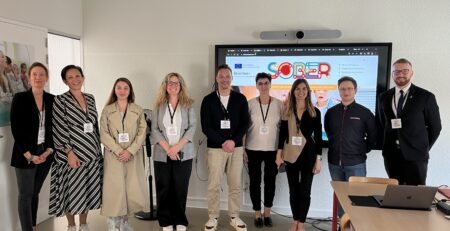
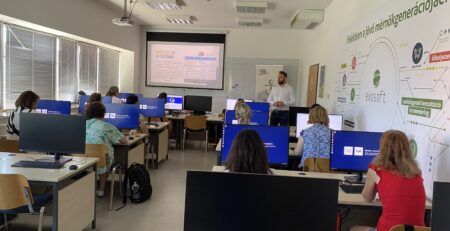
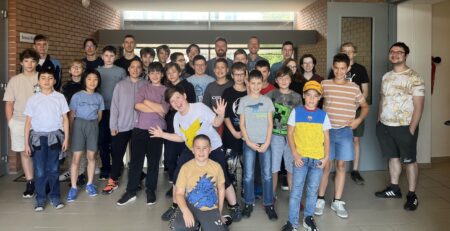
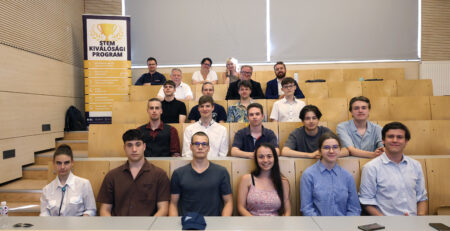
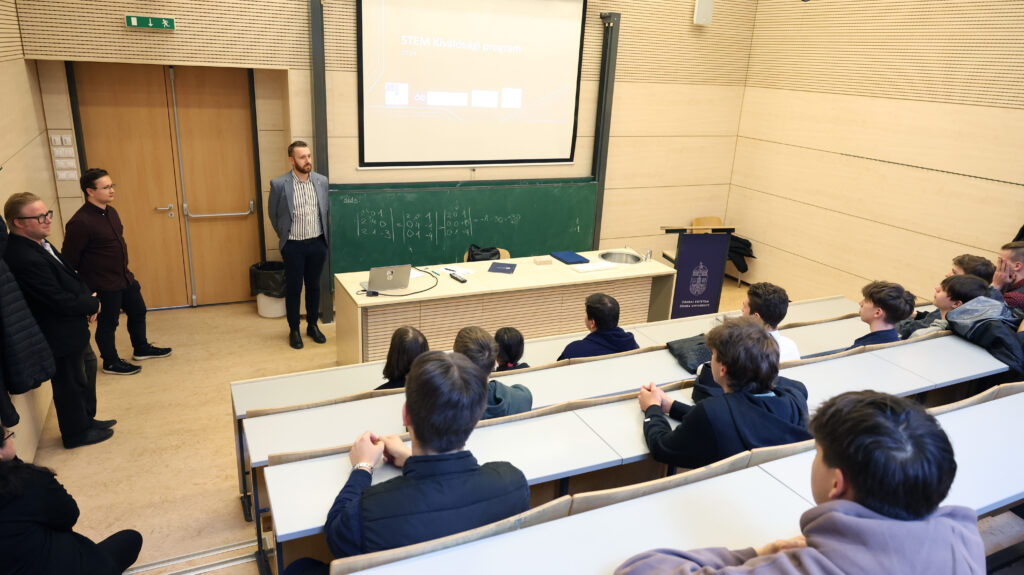
The STEM Excellence Program, organized by the Obuda University STEM Office – Hungary STEM Platform, recently commenced. The purpose of the Orientation Day was to provide a detailed overview of the talent program and to introduce the participating experts.
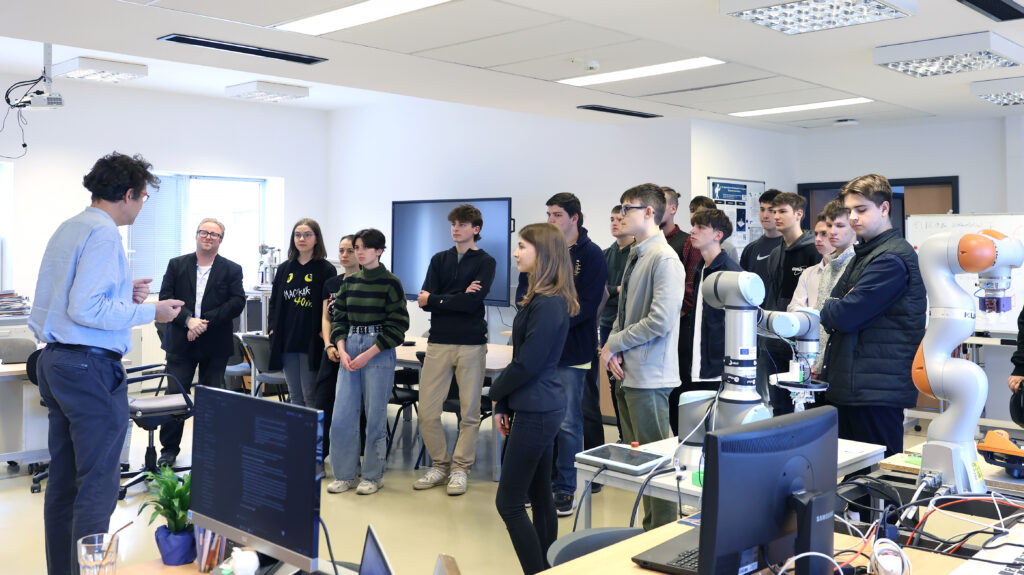
The first agenda item was a visit to the Obuda University – Antal Bejczy Center for Intelligent Robotics (BARK), where Dr. Zsombor Zrubka, Director General of the Obuda University – University Research and Innovation Center (EKIK), described the activities taking place at BARK through an interactive laboratory demonstration. Enterprising participants also had the opportunity to try the new generation industrial quadruped robot dog with the assistance of researcher Zsoldos Panna.
Following this, Zoltán Márton, Head of the Obuda University STEM Office – Hungary STEM Platform, and Sándor Kirchhof, Software Developer / IT Project Manager at the Obuda University STEM Office – Hungary STEM Platform, presented the detailed schedule of the program and introduced the co-instructors. Subsequently, Gábor Képes, Executive Director of the John von Neumann Computer Society (NJSZT), welcomed the talented young participants of the STEM Excellence Program.
In his speech, he highlighted the vital role young talents play in the formation of the digital future and briefly introduced the Society’s “SCHOOL-COMPUTER” exhibition on Báthori Street. This special collection showcases the history and evolution of computing, which students can visit in person next week. The exhibition provides an excellent opportunity for students to become more closely acquainted with technological innovations and the milestones of the IT world.
In his speech, he highlighted the vital role young talents play in shaping the digital future and briefly introduced the Society’s “SCHOOL-COMPUTER” exhibition on Báthori Street. This unique collection showcases the history and evolution of computing, which students can visit in person next week. The exhibition provides an excellent opportunity for students to become more closely acquainted with technological innovations and the milestones of the IT world.
The talent program will consist of five modules, each focusing on the development of different skills:
- The first module focuses on English language skill development. In today’s globalized world, knowledge of the English language is almost indispensable. A vast amount of information is available, but processing it and highlighting the essence is not a simple task. The first module, held by Viktória Tafferner-Gulyás, EAP instructor at the Obuda University – John von Neumann Faculty of Informatics, deals specifically with developing these skills. Students will learn the SQ3R method, which allows them to navigate long texts efficiently and highlight key points quickly.
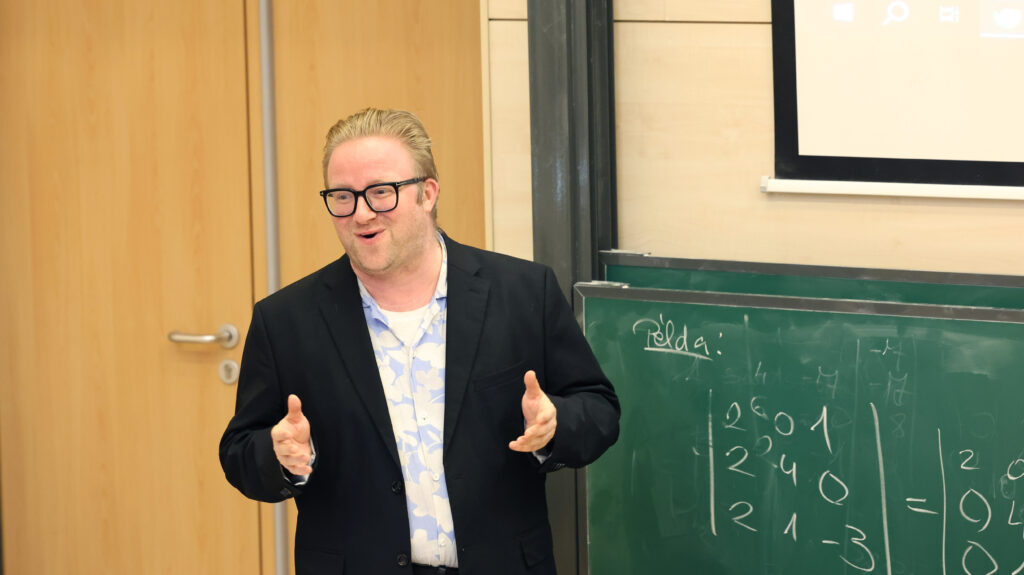
- Next, the second module was introduced by Prof. Dr. Kornélia Lazányi, Professor at the Obuda University – John von Neumann Faculty of Informatics. Within this module, students will participate in self-awareness sessions as well as career orientation discussions, exploring their hidden abilities.
- The leaders of the third module, Sándor Kirchhof and co-leader Tamás Sándor (Master Teacher at the Obuda University Kandó Kálmán Faculty of Electrical Engineering and Director of the Kandó Kálmán Student College), followed with their presentation. They explained that students will participate in electronics laboratory sessions, where they can learn the secrets of communication between various sensors and controllers and design simple systems. In the second part of the module, students will “visit Mars” with Sándor Kirchhof—using LEGO robots. They will design, build, and program the robots using Python to perform various Martian missions.
- The fourth module will be a shorter, two-session motivation training, where the focus will be on motivation under the direction of Prof. Dr. György Molnár (Professor at the Obuda University Kandó Kálmán Faculty of Electrical Engineering and Director of the Obuda University Agoston Trefort Centre for Engineering Education). The content of the sessions will include career orientation and communication elements, talent management, the use of modern ICT tools, digital competency development, and the basics of robotics.
- The fifth module is also led by Sándor Kirchhof. This module is a large-scale hybrid urban planning project in the world of Minecraft. The instructor will hold an 8-session version of the one-week Minecraft camp theme, which has already been proven multiple times through the university’s Summer Children’s University programs. Simulating the dynamics of the real world, students will carry out an urban planning, construction, and maintenance project in a “corporate” environment. The project will focus on developing critical thinking, creativity, problem-solving, and, last but not least, teamwork skills.