03Jul
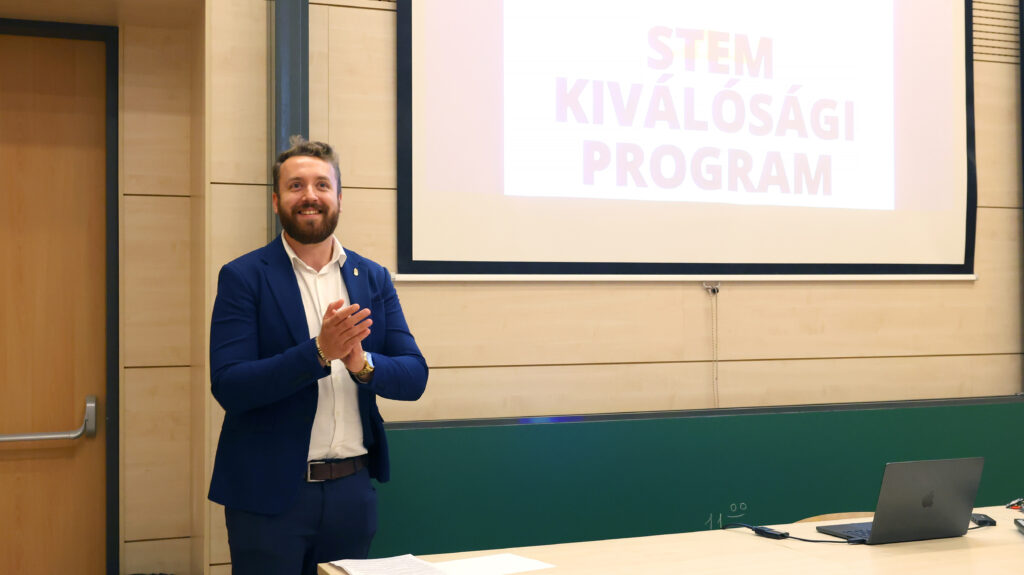
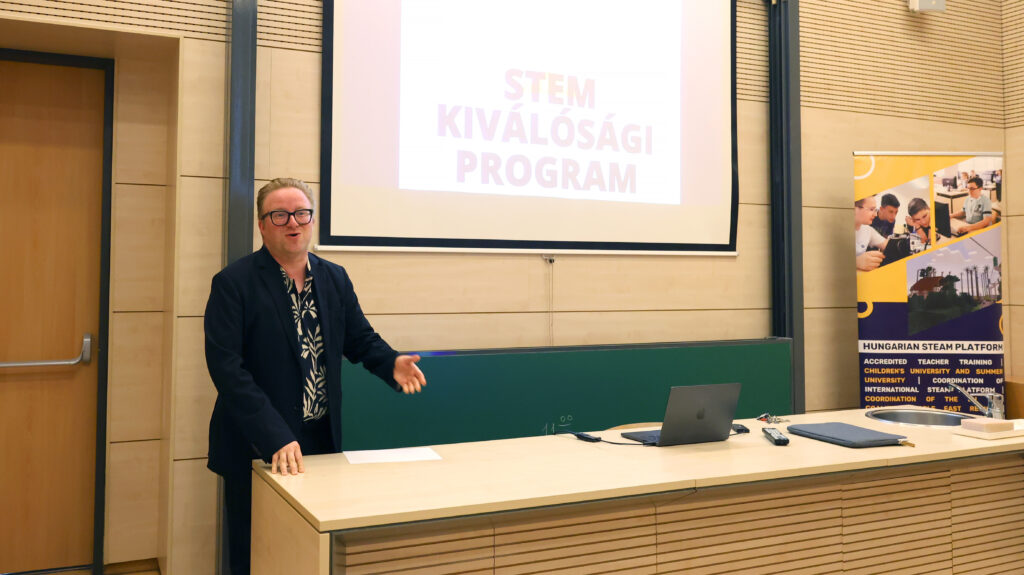
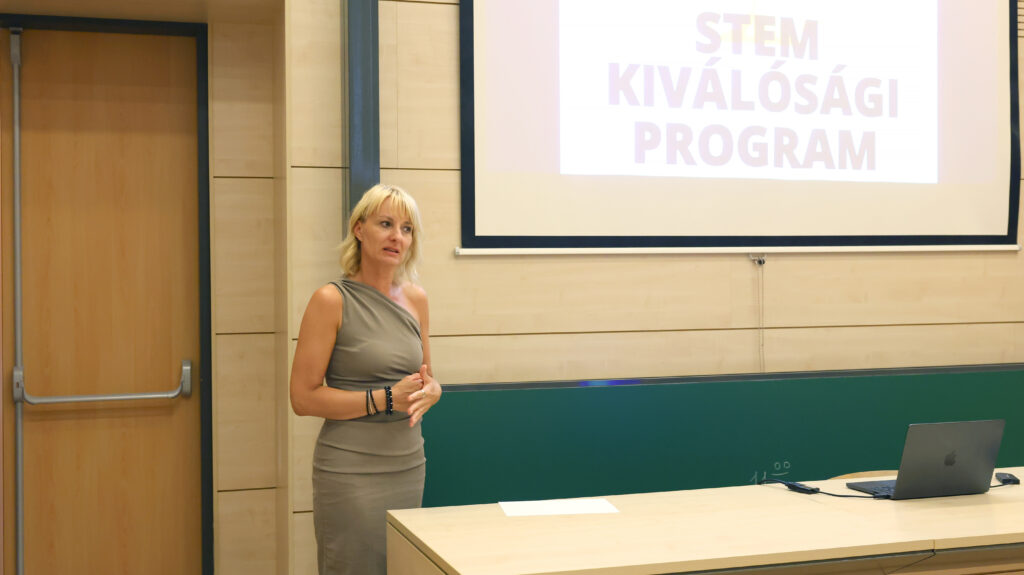
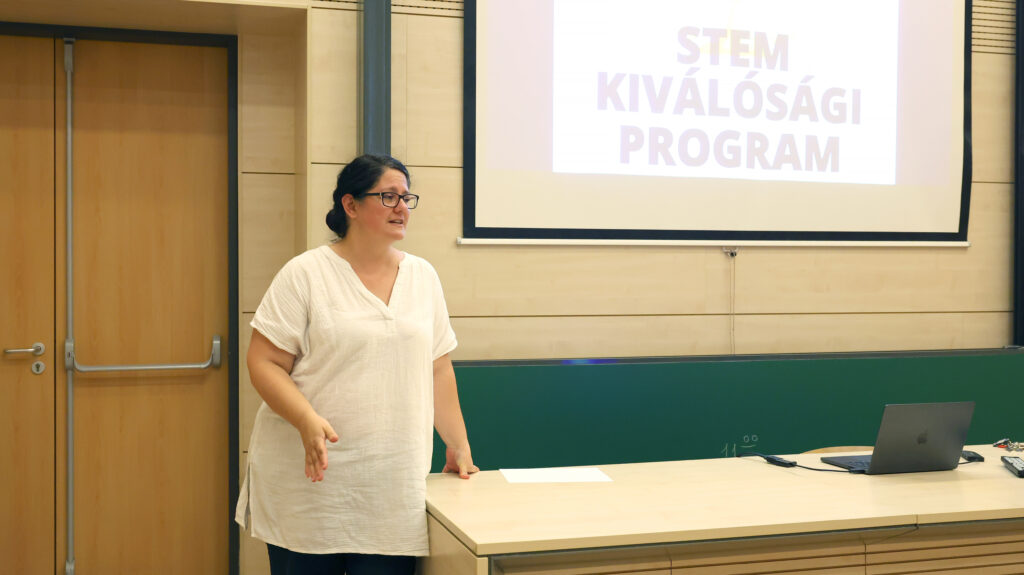
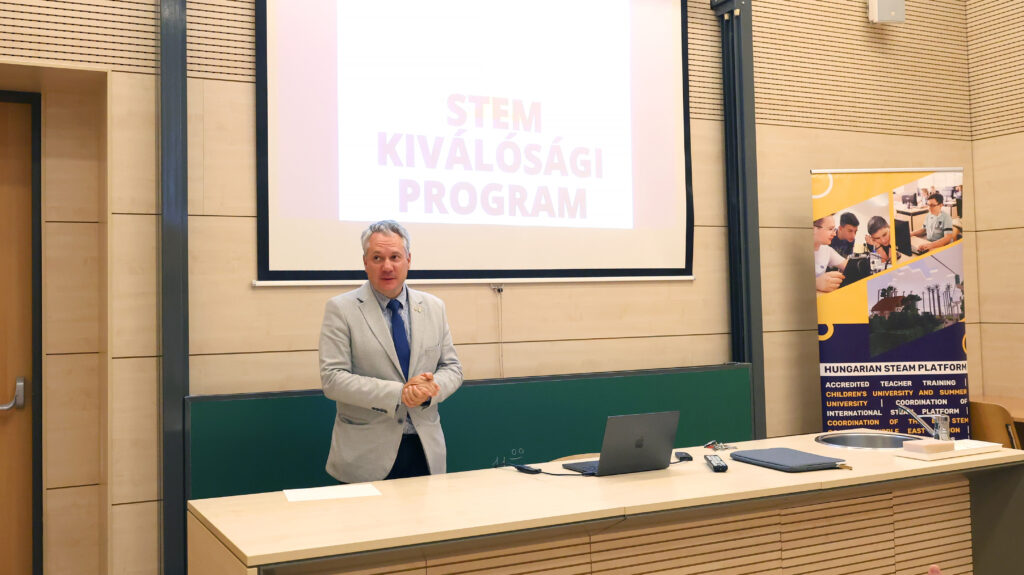
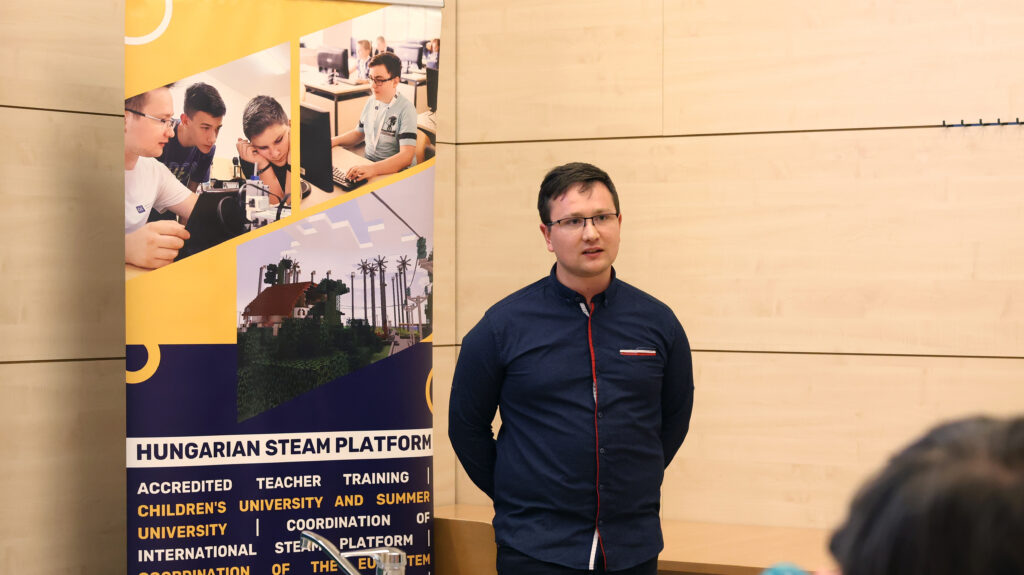
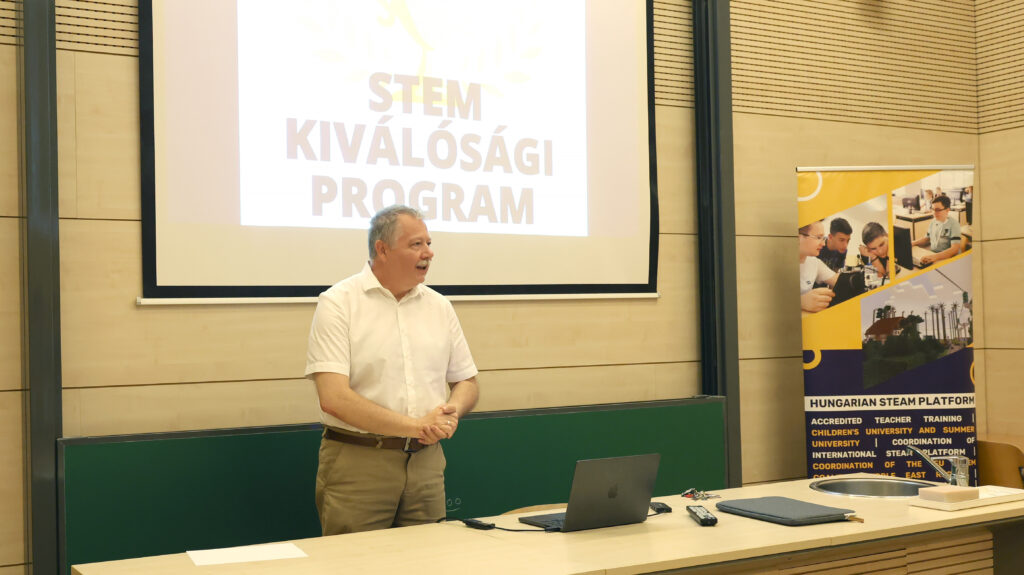
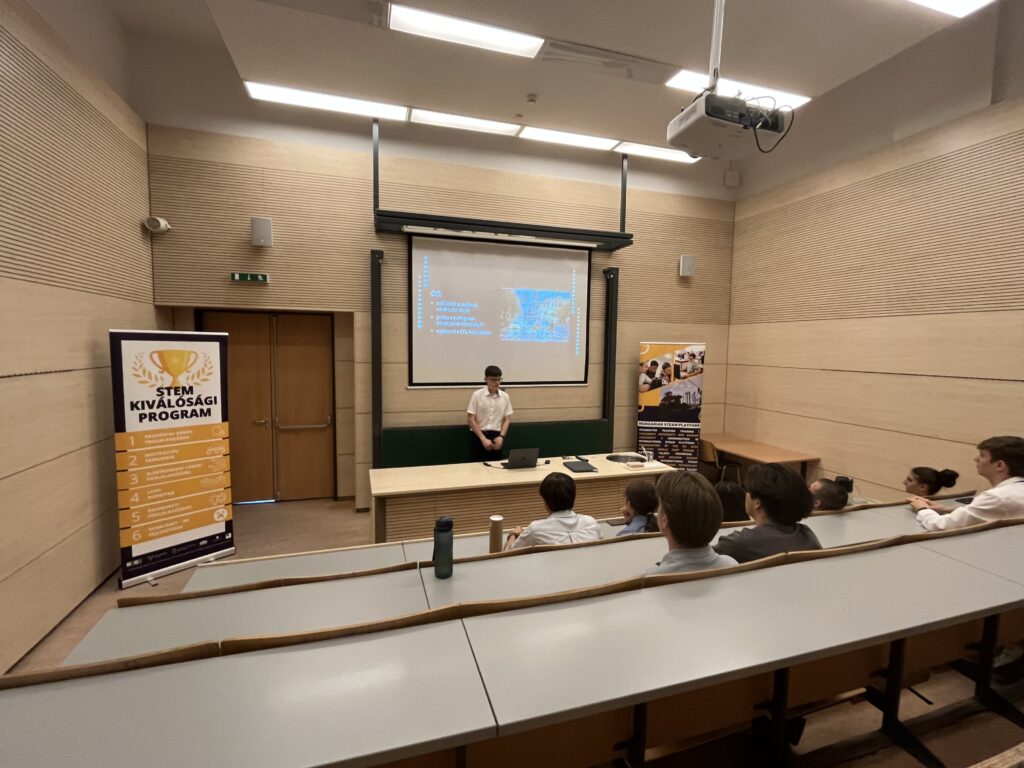
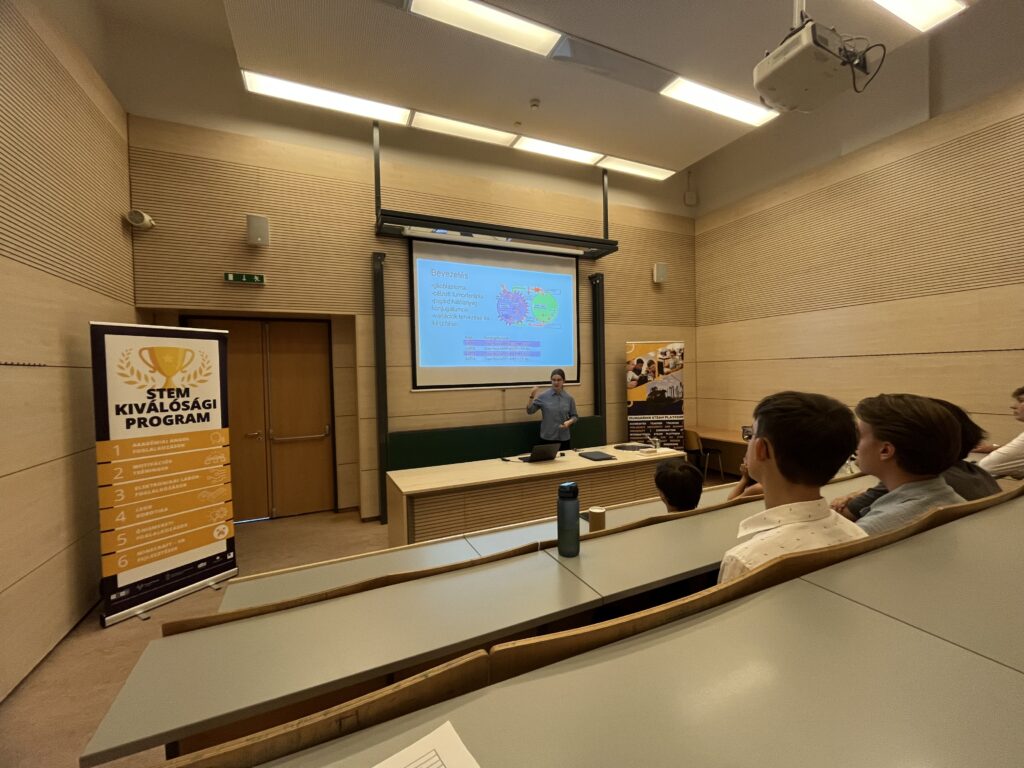
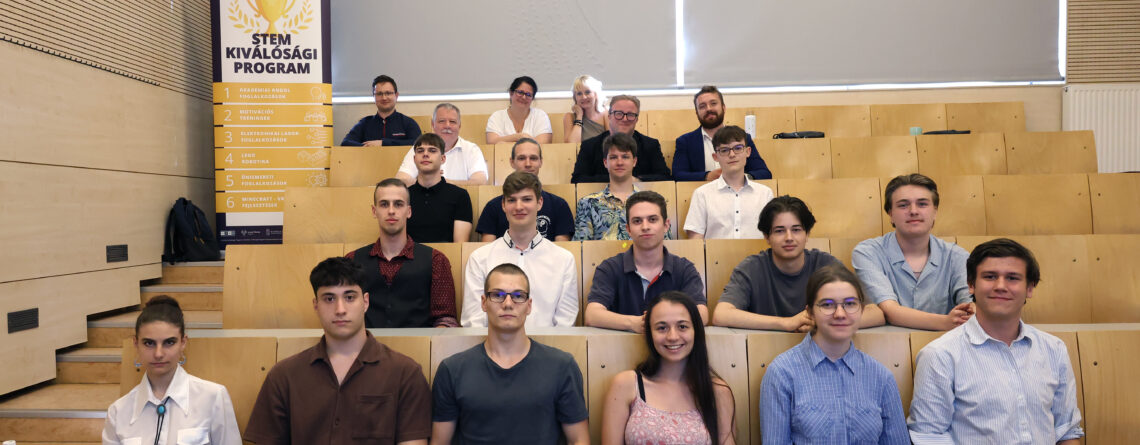
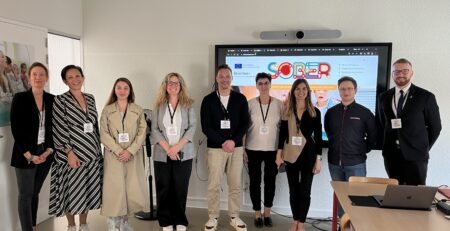
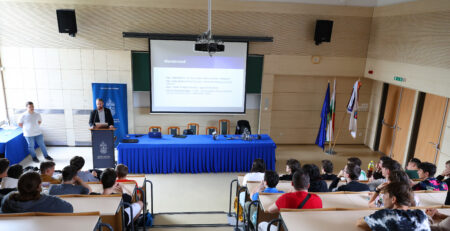
On June 30, 2025, the STEM Excellence Program—implemented with the support of the National Talent Program—officially concluded. During the closing event, the 11th-grade scholarship students presented their research-based competition tasks and showcased the projects they had worked on for several months under the mentorship of involved experts.
Zoltán Márton, head of the talent program, expressed his gratitude to all participants for their active involvement and commitment. He highlighted that it was a particular pleasure to see the energy, curiosity, and professional openness that characterized the scholars, professional partners, and expert colleagues throughout the program.
He emphasized that this was the first talent management program at the STEAM Office to be implemented according to an annual work plan within the framework of a scholarship contract. Based on the experiences, numerous useful pieces of feedback and ideas have already been generated regarding how to support the professional and personal development of talented youth even more effectively in the future.
The talent program was realized in professional partnership with the John von Neumann Computer Society (NJSZT) and Evosoft Zrt. As part of this, the talented young participants took part in factory visits and museum programs, which provided an experiential insight into the past and present of computing.
Gábor Képes, Managing Director of NJSZT, emphasized that this collaboration was particularly important to him, and he considers the program’s objectives extremely valuable. He stressed that NJSZT is happy to support future continuations with its own programs and scientific competitions.
From Obuda University, the implementation team included Prof. Dr. Kornélia Lazányi, Viktória Tafferner-Gulyás, Dóra Arany-Barna, Prof. Dr. György Molnár, Tamás Sándor, Sándor Kirchhof, and Zoltán Márton. The professional staff worked with the scholarship students in a close collaboration divided into modules, ensuring personalized support and development opportunities.
Based on the feedback received after the program’s conclusion, it can be stated that the participating talented youth found the program useful, inspiring, and forward-looking. They also formulated several constructive suggestions for the future, which may serve as a valuable foundation for continuation.
Below are some student testimonials related to the various modules, accompanied by the names of the module leaders.
“Thank you for the valuable lessons—they helped me use the language more confidently in scientific topics as well.”
“The classes had a great atmosphere and were very meaningful—I’m glad I could be a part of it!”
“I think it was very informative and interesting for everyone—this is also shown by the fact that on the last occasion, we stayed much longer than planned.”
“I really liked it; it’s a pity we couldn’t talk more about these topics.”
“There could be even more sessions like this because it honestly helped a lot in understanding myself better.”
“I received interesting perspectives on how to set goals and stay motivated in the long run.”
“It helped me rethink where I am headed and what success means to me. It was useful to finally dedicate time to these questions.”
“During the training, we learned several methods for studying more effectively or dealing with procrastination. It would be great if there were something like this in school too.”
“I really liked that besides robot programming, we could work in teams and truly learned to cooperate through practical tasks.”
“The session helped me think logically and creatively at the same time. Plus, programming wasn’t as scary as I thought before!”
“The challenges were exciting—every team solved the tasks differently, and we learned a lot from each other.”
“I learned a lot about devices and circuits—I wouldn’t have had the chance to get this close to these technologies anywhere else.”
“It was good to feel the teacher’s support, not just during classes but also in the fact that we were encouraged to ask questions. I hope there will be similar opportunities in other programs!”
“Although there were things I didn’t understand at first, by the end of the sessions, I felt a sense of achievement—the environment that developed during the sessions helped a lot with this.”
“It was great that in Minecraft we didn’t just play, but were learning unnoticed in the meantime. Curriculum is completely different this way!”
“I liked that everyone could put in their ideas, and in the end, we really built something meaningful as a team.”
“The Minecraft task helped me understand things that I find hard to imagine in school. Here, however, we could work on it playfully.”
“It can be stated that a close professional relationship has already developed between the university experts and the 11th-grade talented students. They can rely on each other and have jointly set scientific development as their goal—and the STEAM approach plays a key role in this. I would also like to thank everyone for their work who contributed in any way so that twenty high school talents could be present within the walls of Obuda University every Friday and learn through exciting projects.” — Zoltán Márton, Head of the Talent Program.
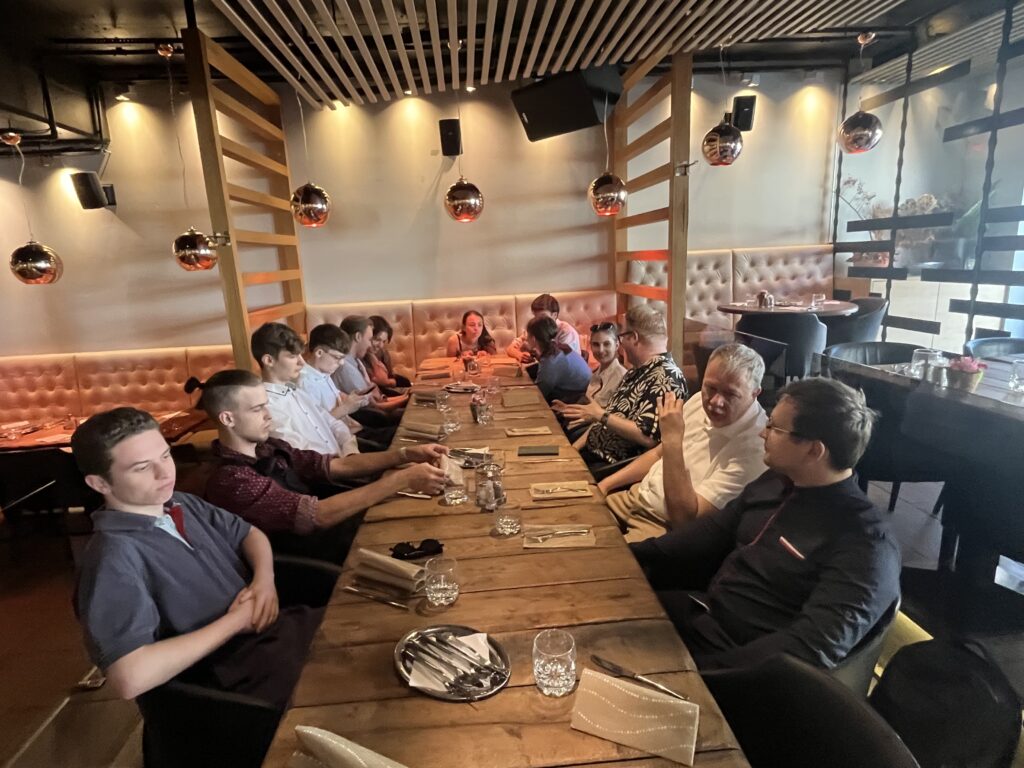
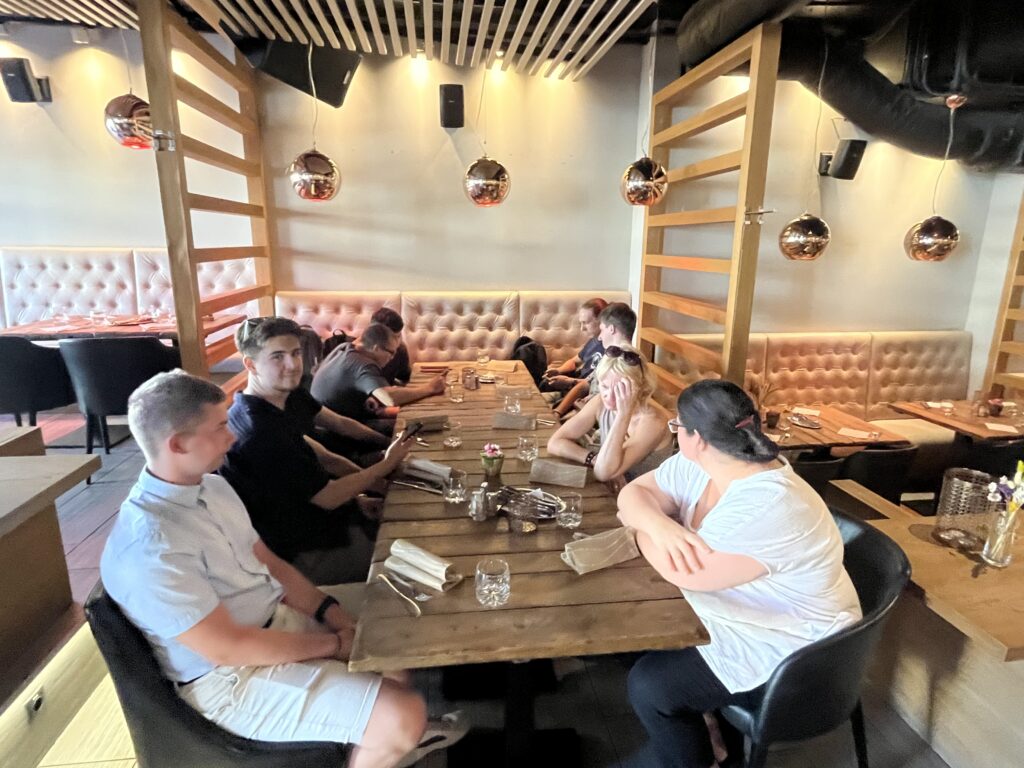
After the scholars presented the work they performed during the program, the moment arrived to conclude our time spent together in a worthy manner. The closing event ended with a joint dinner, where we had the opportunity to personally thank everyone for their dedicated, value-creating work and participation in the program.
Photos by: Judit Sárai, Zoltán Márton
Our STEAM Excellence Program is funded by the National Talent Programme under the grant NTP_STEM_24_0011.
Dear Parents and Children,We are delighted to announce that registration has opened... read more
The Obuda University STEAM Office has once again enriched the lives of... read more
This year’s Summer Children’s University at Obuda University brought not only the... read more
In the "Learning and Teaching Methodology – Knowledge Technology" section of the... read more
On September 11, 2025, a successful conference for the IMPACT project took... read more
Between June 10th and 13th, 2025, Budapest hosted the ICGAL 2025 (International... read more
The STEAM Excellence Program aims to nurture the talent of 12th-grade high... read more
Companies, experts, educators and students met at the International STEAM Festival, this... read more
Nelson Mandela’s words are timeless: "Education is the most powerful weapon which... read more
Zoltán Márton visited the Weöres Sándor Primary and Elementary Art School in... read more