Becoming a student again as a teacher: Experience-based education in the digital age
arany.barna.dora2026-03-10T14:25:13+02:00Nelson Mandela’s words are timeless: “Education is the most powerful weapon which you can use to change the world.” But what happens when this weapon—teaching itself—needs renewal, and the teachers wielding it long for a recharge? The 2025 Summer Teacher University – Train The Trainer Masterclass offered exactly that: five days that provided not just theoretical knowledge, but real experiences, inspiration, and self-awareness for the participating educators.
Under the leadership of Zoltán Márton, teachers experienced firsthand what 21st-century, experience-based education feels like. Learning came to life through interactive sessions, immediate feedback, and the integration of the participants’ prior experiences. We moved past rigid presentations to brainstorm, vote, design, and constantly reflect on new knowledge together.
Playing for knowledge: Gamification and digital tools
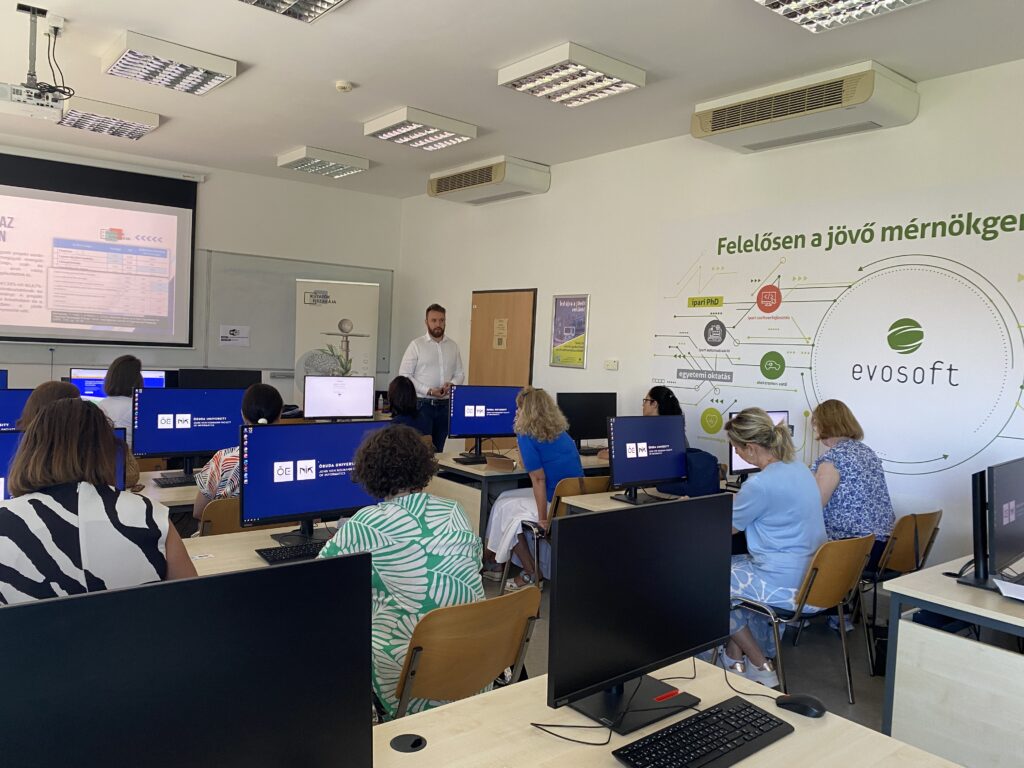
One of the highlights of the program was the methodology of gamification and game-based learning. A quick online poll revealed that while many are just beginning to get acquainted with game elements, others are already using Kahoot quizzes or Minecraft projects. Zoltán Márton emphasized: gamified methods do not replace pedagogy; rather, they serve as tools to ensure that learning is not just an obligation, but an experience.
We tested numerous digital gamification platforms, such as Kahoot!, Blooket, Wayground (formerly Quizizz), SOBER, Flippity, Wordwall, LearningApps, Genially, Edpuzzle, Baamboozle, Padlet, Mentimeter, and Plickers. These applications not only expanded our toolkit but also shifted our perspectives. One educator enthusiastically noted: “So many gaming interfaces can support education!”—recognizing the strategic value of digital games in learning.
No walls between subjects: STEAM in primary schools
The introduction of STEAM education (Science, Technology, Engineering, Arts, Mathematics) was also a key topic. Zoltán Márton opened with a provocative question: “What if all digital devices disappeared from schools overnight? How long would we last with the old methods?” The essence lies in building bridges between subjects and bringing real-world problems into learning. We heard ideas ranging from school garden projects to Minecraft-based urban planning. The most important message: after identifying the difficulties, we must find concrete starting points and harness the power of group work and students’ natural curiosity.
Finnish-hungarian inspiration and a digital vision
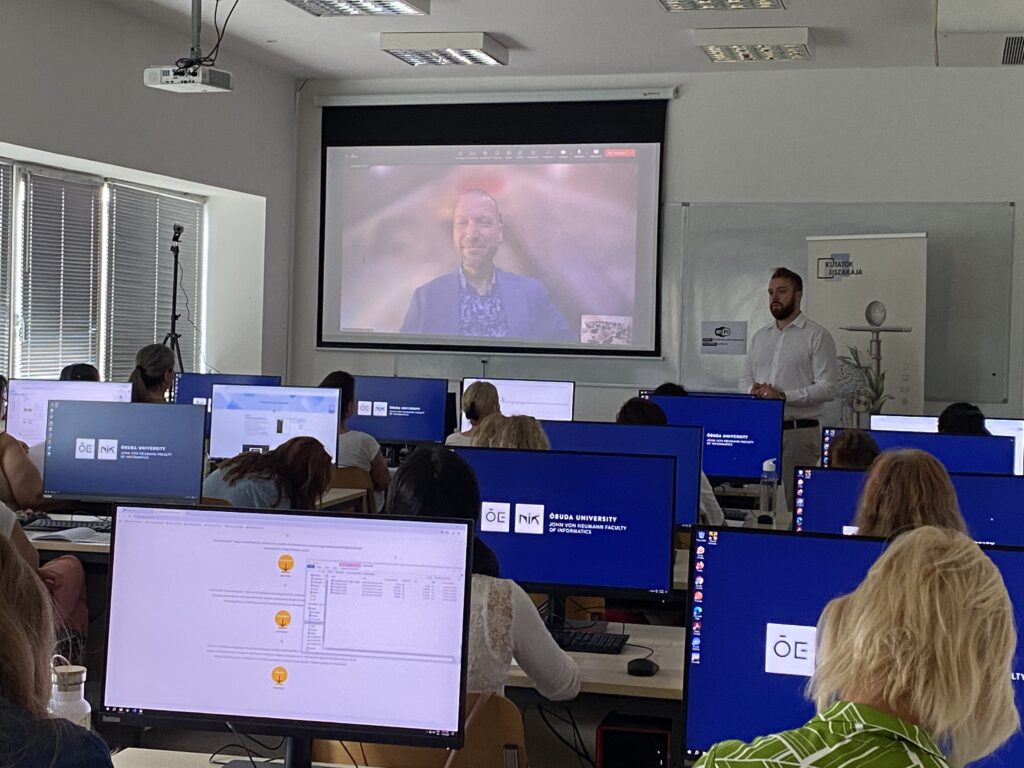
Dr. Kristóf Fenyvesi, lead researcher at the University of Jyväskylä in Finland, opened an international perspective via an online session. As the STEAM Director of the Experience Workshop network, he spoke about the adaptability of the Finnish education system and how deep mathematical knowledge can be built playfully through artistic experiences.
Prof. Dr. György Molnár, head of the Engineering Education Center at Obuda University, spoke about digital pedagogy, emphasizing that ICT tools and artificial intelligence are playing an increasingly large role in education. While technology is useful, the key to success lies in the creative and conscious application by the educator, not in the devices themselves. The professor also presented specialized training programs designed to deepen digital pedagogical knowledge.
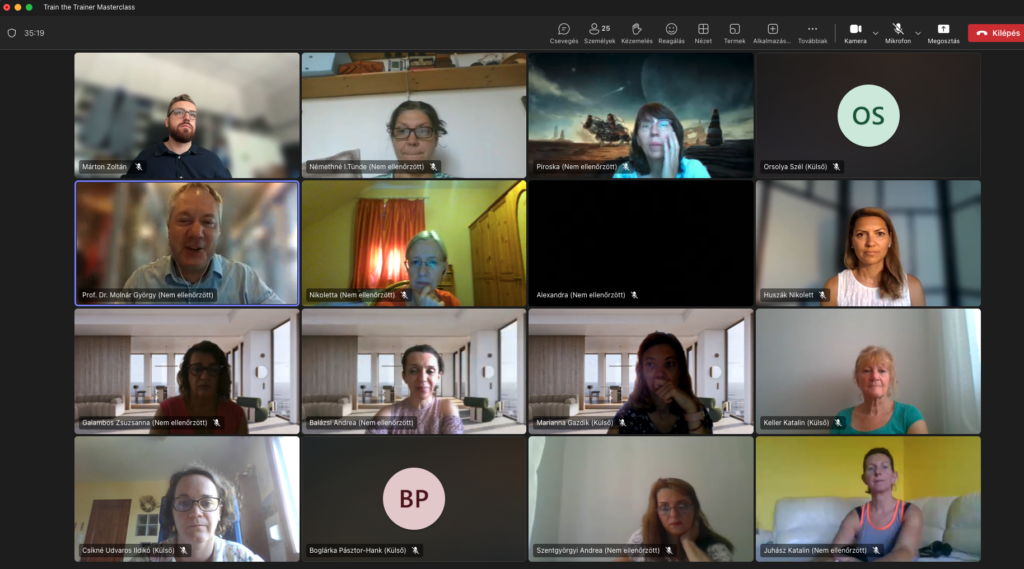
"Hack the Human": Educational security in the digital age
One of the most shocking parts of the program was the “Hack the Human” session, which introduced us to social engineering and the tools of psychological manipulation. We learned that one of the most effective ways to extract confidential data is through manipulation, which can pose a serious threat even in a school environment—as seen in recent bomb threats or phishing emails. The takeaway: manipulation always builds on human trust rather than technology, making the development of digital awareness crucial.
The power of teacher well-being: Authenticity and fulfillment in the vocation
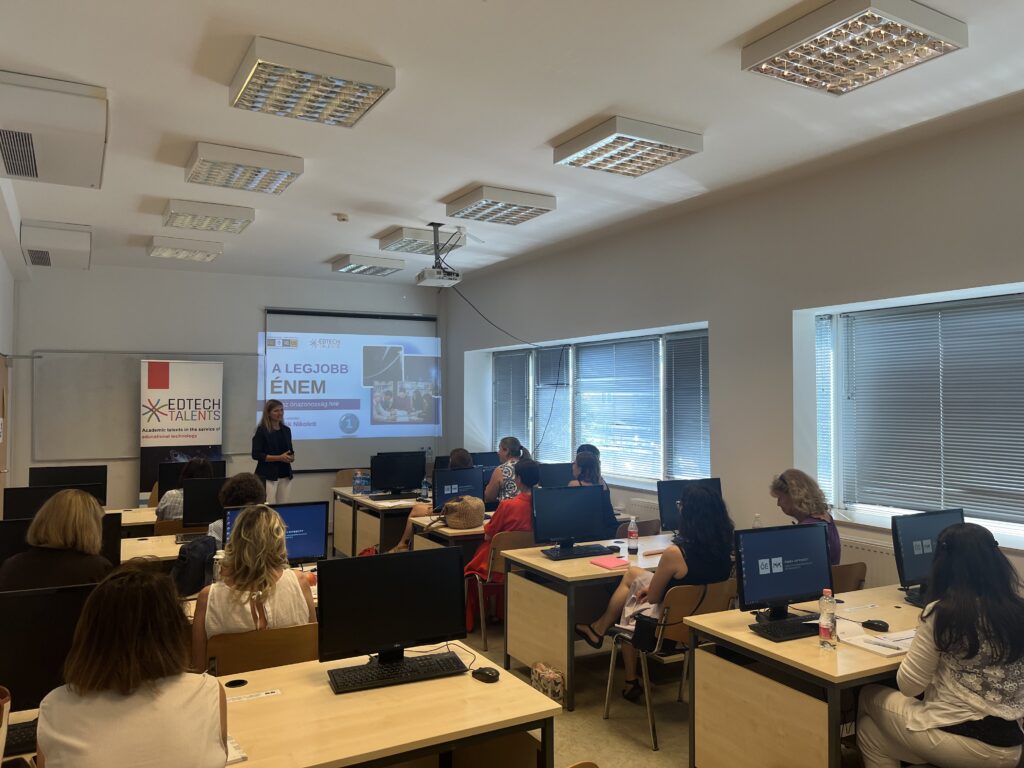
Nelson Mandela’s thought took on new meaning during the “My Best Self as a Teacher and a Human” workshop. The foundation of quality education is the well-being of teachers, as this directly affects student results and the school atmosphere. Research proves that teacher self-efficacy and collegial support are essential for high job satisfaction and lower burnout.
Led by Nikolett Huszák, Transformative Coach and Head of the Corporate Relations and Career Office at the Keleti Károly Faculty of Business and Economics, educators embarked on a three-day journey of self-discovery. As Nikolett put it: “I can give the most to others when I remain true to myself in the process.”
Self-awareness, community, and building the future
The first day focused on establishing frameworks, a common language, and trust. Analyzing generational challenges opened new perspectives, leading many to realize: “It’s not bad or good, just different.” A SWOT analysis based on teacher self-reflection helped map out strengths we rarely consider.
The second day centered on new habits, goal setting, and overcoming challenges. “There is no real change without conscious presence,” Nikolett said. Deep conversations emerged during pair exercises, where many felt for the first time: “I am not alone.” The power of the community was liberating, and participants shared numerous practical ideas and teaching strategies.
On the closing day, the future had already begun. Everyone formulated their own teaching philosophy and made a concrete commitment to their future. In the self-reflection closing circle, words like “inspiration, synergy, new perspective, development, and authenticity” were heard. Participants unanimously stated: “This gave a lot not just professionally—but humanly as well.” As Nikolett Huszák summarized: “Teaching is teaching myself. I shape the future with my best self.“
Minecraft in education – Games, methodology, and awakening teacher curiosity
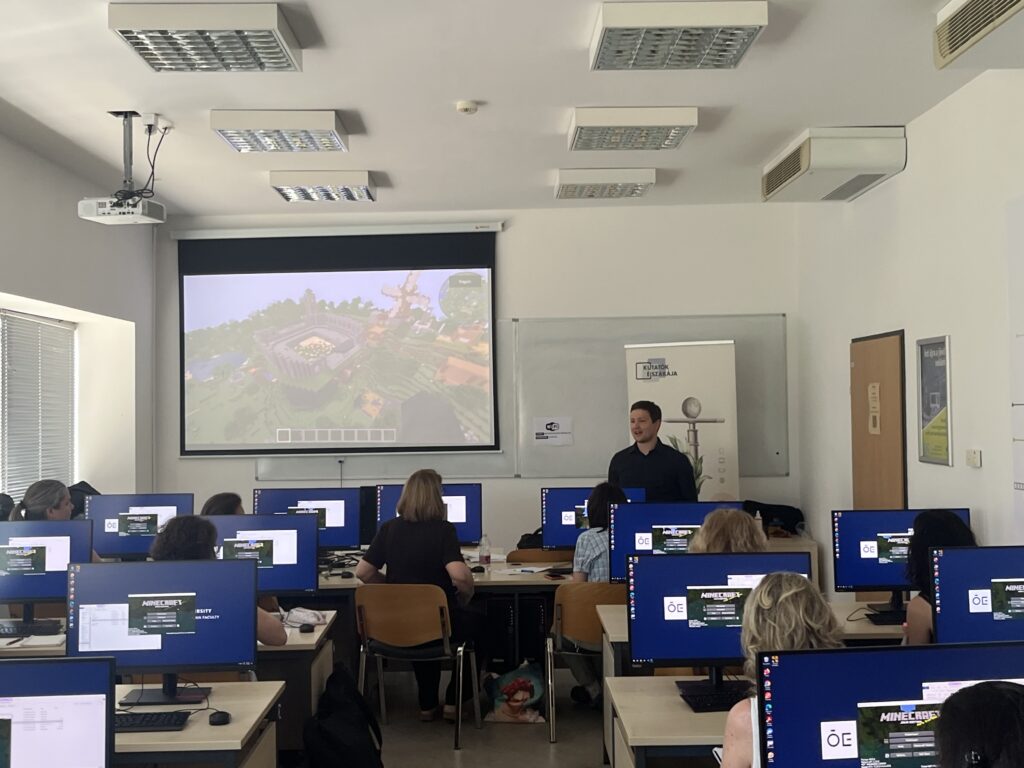
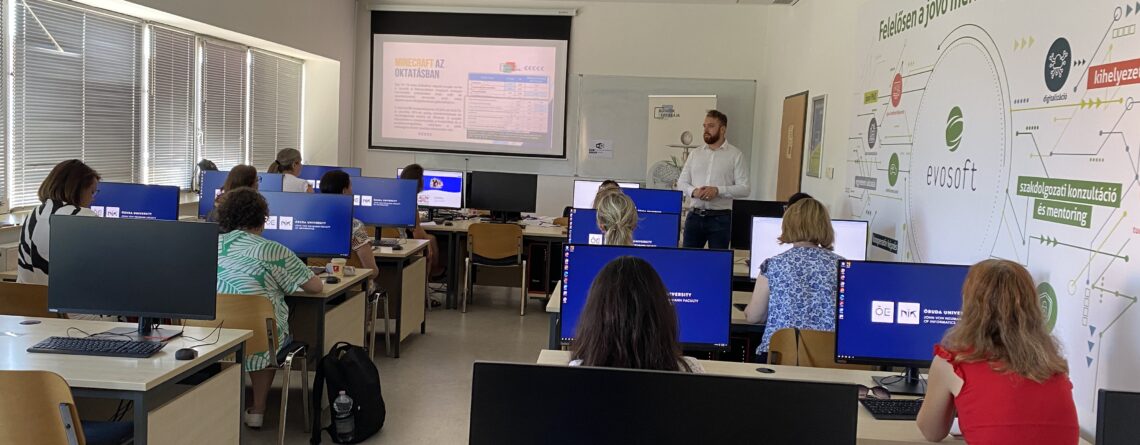
One of the week’s most memorable sessions was exploring Minecraft as an educational tool with Sándor Kirchhof.
“We first introduced the participating teachers to the basics of the game: they became familiar with the world of blocks, the difference between survival and creative modes, and how a seemingly ‘simple’ game becomes a complex learning space. Many were amazed at the deep systems and freedom hidden behind the colorful cubes. Following this, we discussed how students and educators think differently about such a platform—many shared that they previously found it hard to imagine what keeps children occupied for hours with a game like this. The answer lies not in the pixels, but in creativity, freedom, and the joy of discovery.“
The teachers, of course, did not remain passive observers: they entered the world of Minecraft themselves in a joint multiplayer experience. The moment of joining the server was on the border of digital chaos and pedagogical miracle—50 teachers on a Minecraft server at once is every child’s dream (or nightmare). During the shared adventure, possibilities for classroom application arose: such as virtual field trips, rebuilding historical sites, or solving mathematical problems in a playful space.
In the second half of the block, we moved on to the basics of using Artificial Intelligence for educational purposes. We looked at how AI can be used as support in lesson planning, assessment, or even creative writing—such as story generation or curriculum differentiation. We discussed the opportunities inherent in algorithms that assist teacher work and the level of awareness required for their application.
To close the program, we addressed the darker sides of the digital world with a brief introduction to the basics of cybersecurity. From password management to the conscious use of social media, several topics relevant to both students and teachers were discussed. The goal here, too, was to approach security from an educational perspective rather than just a technical one.
Finally, we were introduced to an educational mod called SteamCraft, which combines the world of Minecraft with the STEAM approach. This internally developed add-on offers opportunities to support science, art, and technology projects through play. Teachers welcomed the fact that through such a creative tool, they can bring children even closer to the playful solution of real-world problems—because where there is room for play, there is room for learning.
Summary thoughts
The 2025 Summer Teacher University represented a true intellectual recharge for the pedagogical community. Modern, experience-based educational strategies were not just discussed in theory; we experienced them firsthand. Everyone found at least one new idea or tool they would be happy to introduce to their teaching tomorrow.
This teacher training did not just provide knowledge; it built community and inspiration. As the camp’s mission stated: the goal is to promote the integration of modern, experience-based teaching methods into everyday education. We all feel that we have become active participants in this mission.
Returning home with new momentum, full of ideas and faith, we continue our work to make the learning of future generations even more effective and inspiring. There is no shortage of inspiration—let’s pass on what we’ve learned to our colleagues and build a more playful, conscious, 21st-century education together!