The Hungarian STEAM Platform strengthened its position at the EU STEM Coalition General Assembly in Brussels
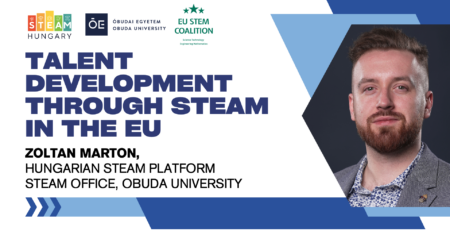
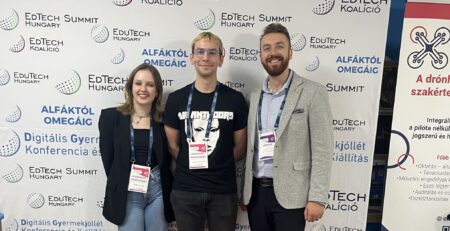
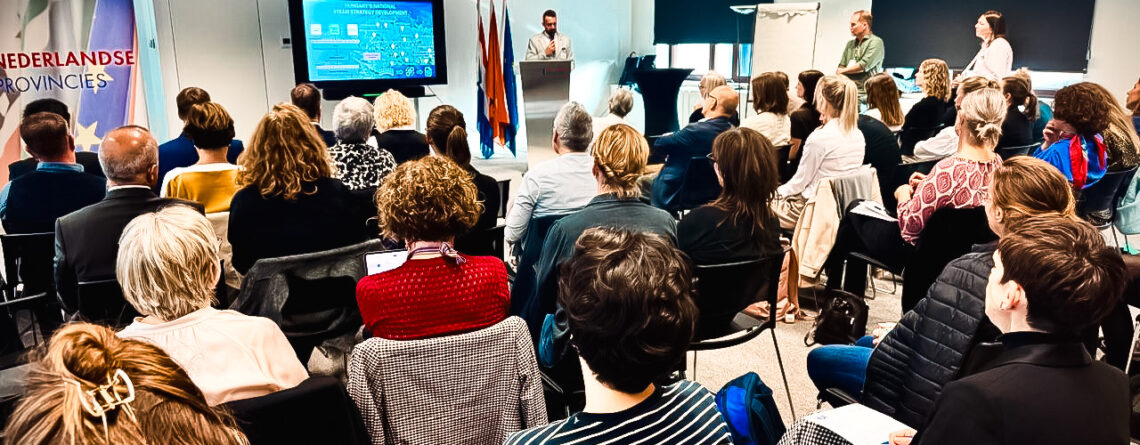
arany.barna.dora2026-03-10T14:24:14+02:00On November 5–6, 2025, Brussels hosted the Annual General Assembly of the EU STEM Coalition, where Europe’s leading experts, institutions, and organizations discussed the future, challenges, and opportunities of STEM and STEAM education. Hungary was represented by Zoltán Márton, Director of the Hungarian STEAM Platform and Head of the Óbuda University STEAM Office, who presented the country’s current achievements and the evolution of the national STEAM ecosystem.
A new chapter in STEAM development
On July 15, 2024, Prof. Dr. Levente Kovács, Rector of Óbuda University, appointed Zoltán Márton to lead the STEAM Office, thereby launching the implementation of the institution’s five-year STEAM strategy. The goal of this strategy is to strengthen the university’s long-term educational and research directions by integrating natural sciences, technology, engineering, arts, and social sciences into a unified approach.
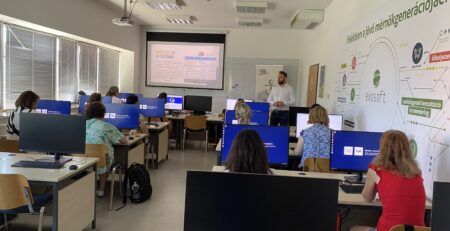
In the past year, several initiatives supporting the STEAM philosophy have been realized. The STEAM Excellence Program for high school students was launched, and the university hosted the first Hungarian STEAM Platform Conference as well as the EU STEM Coalition Working Group Meeting. Additionally, the institution organized the country’s first International STEAM Festival with 200 participants, and the International GenAI Literacy Conference, involving experts from 16 countries in collective thinking.
The STEAM Office established an accredited 30-hour teacher training course and launched a five-day Summer Teacher University, supported by RRF and Horizon Europe grants. Expanding international relations, a teacher training program was also held in Beijing, thanks to the Experience Workshop. The office further developed its project supporting students with special educational needs (SEN) and continued its Minecraft-based educational program. Furthermore, coordinated support for educational research, impact assessment, and EdTech developments received high priority.
The themes of the Children’s University Summer Camps were also expanded: new programs were launched in green city development, defense and asset protection, coding, and e-sports, providing the younger generation with opportunities for experience-based learning. Based on the experiences of the past year, Obuda University is gradually building the cooperation and knowledge-sharing frameworks that will strengthen the domestic and international connections of STEAM-based education and research in the long term.
Hungary in the spotlight
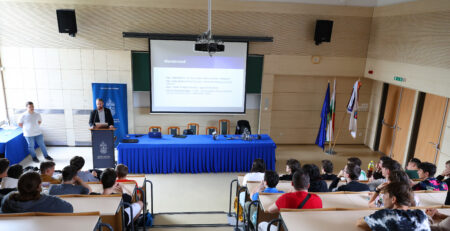
As part of the plenary program, Zoltán Márton delivered a presentation titled “Country Update: Hungary,” detailing how the Hungarian STEAM ecosystem has evolved over the past year and how government, social, academic, and corporate stakeholders collaborate to strengthen STEAM education. The presentation provided an overview of a partnership model that integrates talent management, teacher training, research, and innovation into a single framework, resulting in a tangibly more transparent and organized operation in Hungary.
The presentation was very well received: several international experts highlighted the model’s thoughtful structure, the deliberate professional direction of the development process, and the power of a collaboration-based approach. The official summary of the conference also made special mention of the Hungarian presentation, citing it as a “structured, well-thought-out, and inspiring” example. The feedback confirmed that the efforts of the Hungarian STEAM Platform over the past year are heading in the right direction and that the new objectives are relevant not only at a national but also at a regional level.
The presence in Brussels clearly indicated that Hungary is becoming an increasingly active and visible player in Central and Eastern European STEM/STEAM collaborations. Representatives from several countries expressed their intent to cooperate and indicated their interest in joining the International STEAM Festival held in Hungary, as well as other domestic professional programs. The presented ecosystem model has thus created a valuable reference point, not only for policy-making but also for international networking.


European trends and new working groups
The professional program of the assembly clearly outlined the European directions that will define the development of STEM and STEAM education in the coming years. Plenary lectures and research presentations emphasized that educational systems can only achieve real and sustainable results if developments are coordinated at a systemic level and built on strong policy and institutional cooperation.
Research by the Technopolis Group provided the first comprehensive EU-wide picture of how member states support STEM education from kindergarten to vocational training, what systemic barriers hinder progress, and where quickly deployable best practices are available. Similarly, the presentation by Professor Louise Archer garnered significant interest; it examined the issues of STEM identity, student motivation, and social inequality, highlighting that the flourishing of talent depends on a supportive educational environment and inclusive pedagogical approaches.
The presentation of the Swedish STEM strategy illustrated how industrial players, vocational training, and regional networks can operate in an integrated system. Furthermore, one of the most important professional outcomes of the assembly was the launch of the new Industry–Education Partnership Working Group, which supports practical cooperation between education and economic stakeholders, complementing the existing AI in Education and Primary & Secondary Education working groups. The expansion of the CoVE STEM Europe network also indicates that Europe is placing increasing emphasis on centers of excellence and related knowledge sharing.
Overall, the plenary content confirmed that Hungarian STEAM efforts are on the right track: the partnership model, the ecosystem perspective, and the systemic developments are in full alignment with European professional trends and future EU priorities.
Strengthening international professional relations and collaborations
The Brussels General Assembly brought significant results for Hungary not only in its professional content but also in the partnerships formed. Following the Hungarian presentation, numerous delegations expressed interest in the Hungarian model and indicated the possibility of joint projects, professional visits, and long-term collaborations. Based on the feedback, there is a growing demand for the experiences and development directions of the Hungarian STEAM ecosystem to serve as a reference point for other countries, particularly in the context of regional cooperation.
Leaders of several partner organizations noted that the Hungarian STEAM Platform has visibly strengthened over the past year, backed by a consistent professional structure, and that it is worth developing long-term joint directions. Furthermore, several EU STEM Coalition organizations signaled their intention to participate in the International STEAM Festival in Hungary, which could increasingly become a central regional event.
During personal professional discussions, it became clear that Hungary could play an increasingly defining role in Central and Eastern European STEAM collaborations. The players in the Hungarian ecosystem model—universities, industrial partners, researchers, and social organizations—represent a collaboration-based approach that is an attractive example for many countries. Thus, the assembly was not only about presenting Hungarian results but also about starting substantive professional cooperation with a significant number of partners.
Strategic opportunities and next steps for Hungary
The Brussels assembly clearly confirmed that a favorable period is opening for Hungary in regional and European STEAM collaborations. Professional feedback, newly formed relationships, and European trends all show that the direction of domestic developments aligns well with EU STEM/STEAM priorities, particularly initiatives built on an ecosystem approach, inclusive talent management, and educational innovation.
During the assembly, several professional opportunities emerged that could later strengthen Hungary’s role in the network of international cooperation. Several delegations emphasized the need for professional forums where Hungary can appear as an active participant, highlighting not only domestic results but also international knowledge transfer and partnership building. Representatives from several countries expressed their openness to future collaboration with Hungarian partners in such initiatives.
Parallel to this, there is an increased recognition that it is worthwhile to establish a more transparent and coordinated cooperation framework for domestic STEAM stakeholders. Such a system would support regular dialogue between institutions, companies, researchers, and professional organizations, facilitating the more effective utilization of international professional results in Hungarian developments.
The new guidelines presented in the plenary program may also open new perspectives for Hungary. These initiatives support areas that the domestic ecosystem is already actively addressing, showing a clear alignment between Hungarian developments and EU priorities.
In conclusion, the Brussels General Assembly showed that Hungary can join European STEM/STEAM processes from an increasingly strong position. In the coming months, several strategic consultations and preparatory works are expected to begin, which could define the international integration and professional presence of the Hungarian STEAM ecosystem for the long term.


For Zoltán Márton’s linkedin post of the event: