18Jul
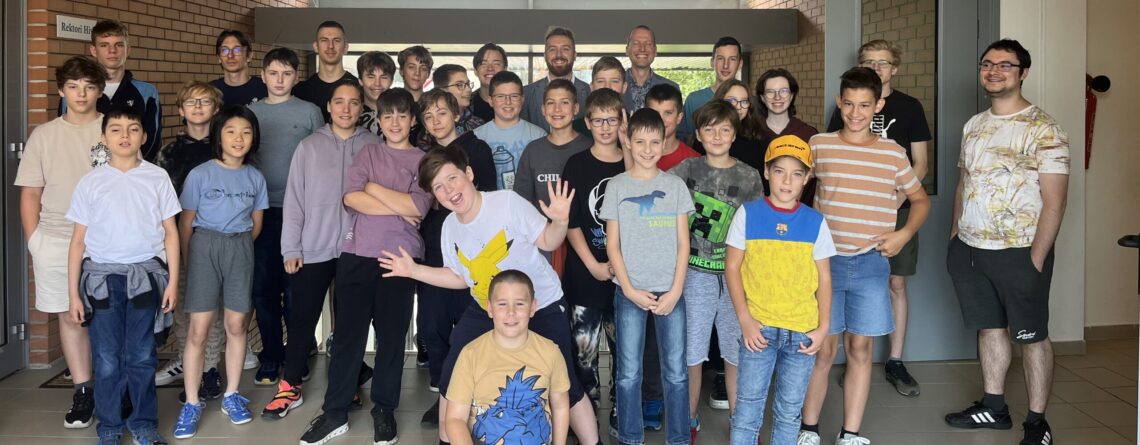
This year’s Summer Children’s University at Obuda University brought not only the joy of play but also the power of knowledge to participating children.
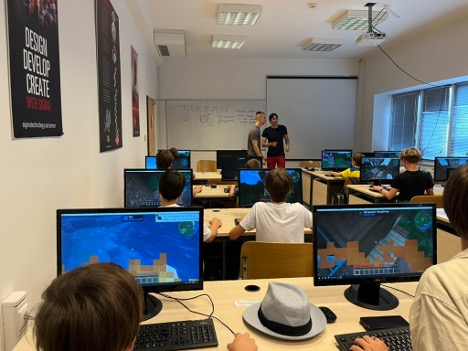
Two parallel Minecraft-themed camps—the “Green City Development” camp and the “Basics of Programming in the Minecraft World” camp—offered different yet complementary journeys for the children: one guided them through the world of energy, while the other led them down the path of digital thinking and programming.
In this article, we summarize the events as they happened day by day.
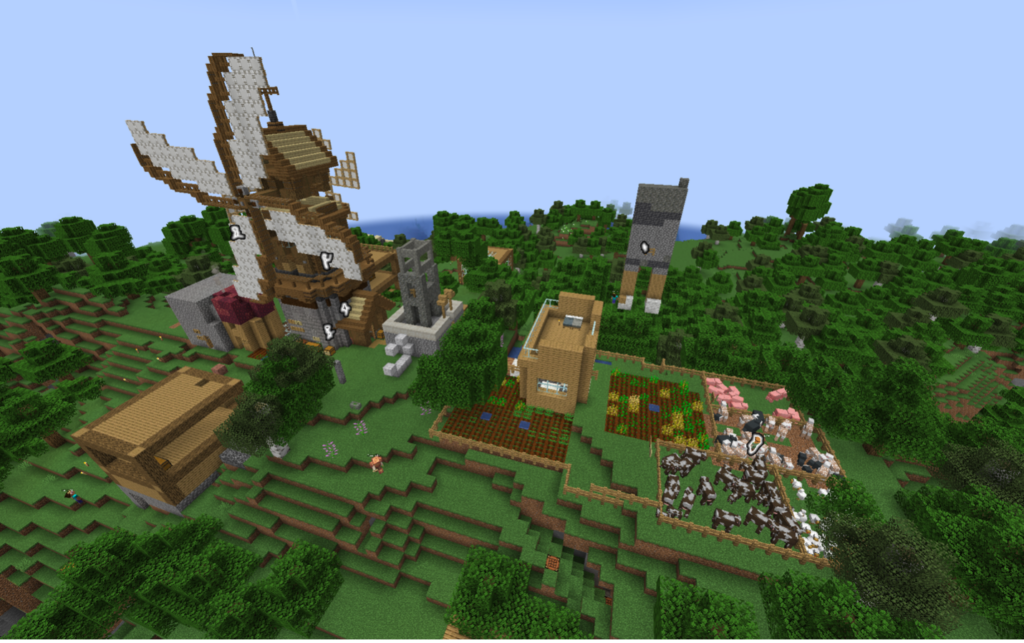
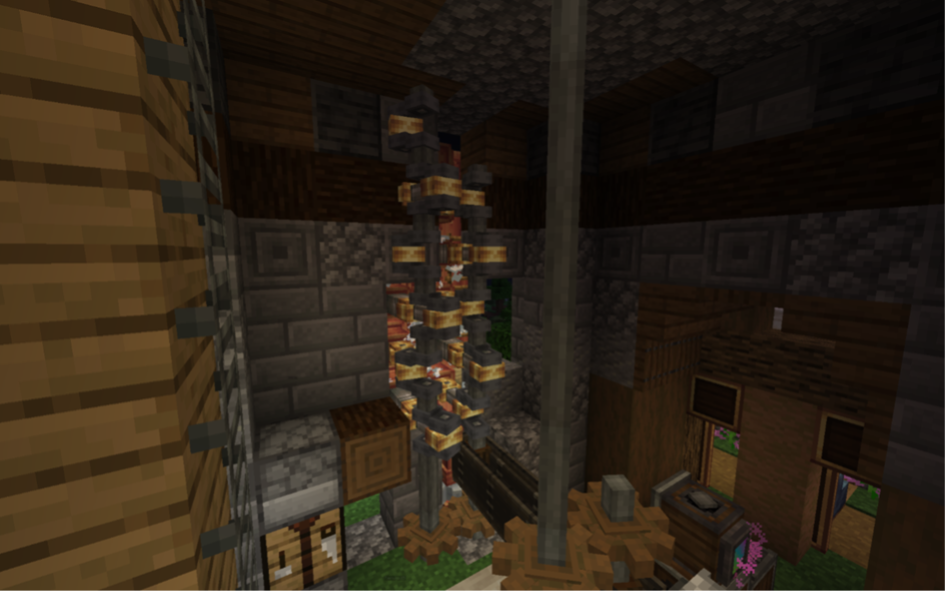
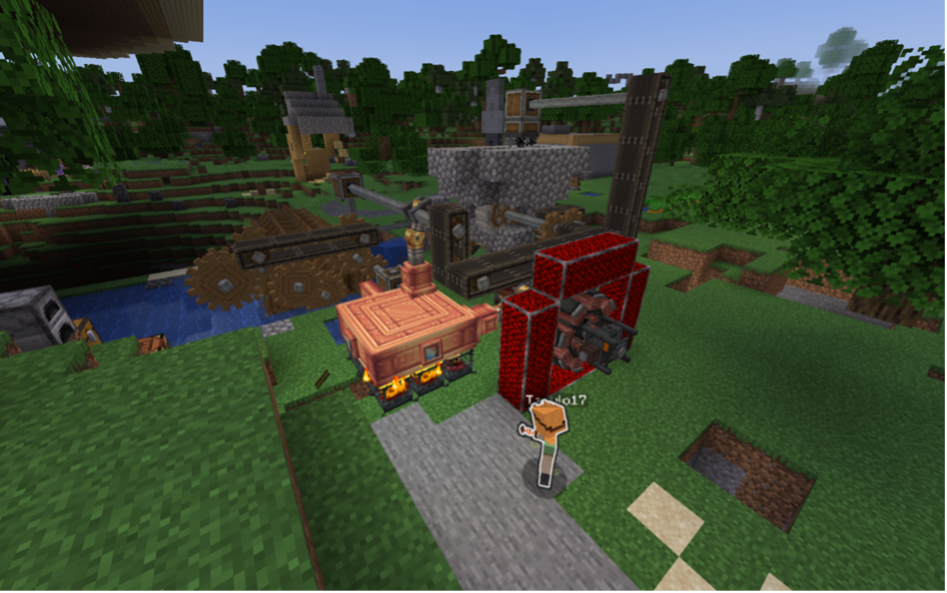
Green City Development camp: We talked with the children about the history of energy, the very first energy sources, and how they evolved into the modern era. The focus of the day was on mechanical energy and drivetrains. In teams, they built watermills, wind turbines, and gear-driven power transmission systems.
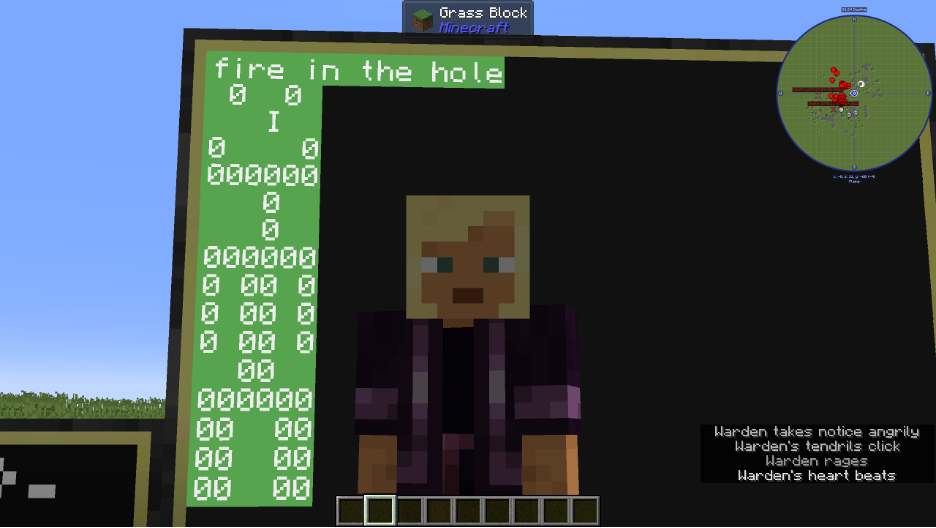
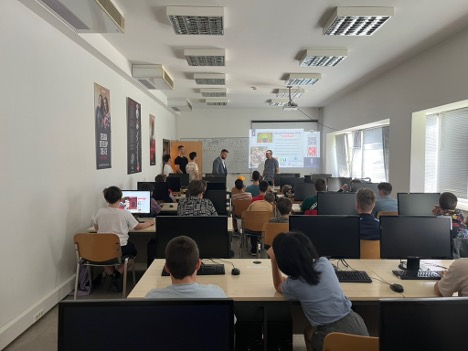
Basics of programming in the Minecraft world camp: Simultaneously, in the other room, the digital world took center stage. The children were introduced to the binary number system and AND, OR, and NOT logical operations. By the end of the day, they even built a binary adder functioning with redstone circuits. The afternoon concluded with a shared survival game—the city built then later became the home for their programmed systems.
Green City Development camp: Participants gained insight into the world of steam engines: their history, operation, and significance. They then began constructing a massive steam engine and a railway network. Additionally, the buildup of infrastructure necessary for self-sufficiency (animal and crop farms) began, along with urban planning to ensure ready sites for structures to be built on subsequent days.
Basics of programming in the Minecraft world camp: The children dove into Lua programming. Their first simple codes displayed text messages, while they also learned the mkdir, cd, edit, and ls commands, which are essential for basic Linux operating system use. Step by step, they became more at home in the world of virtual operating systems.
The Lua programming language is a widely used scripting language in real life, utilized in various fields, including the development of the game Roblox.
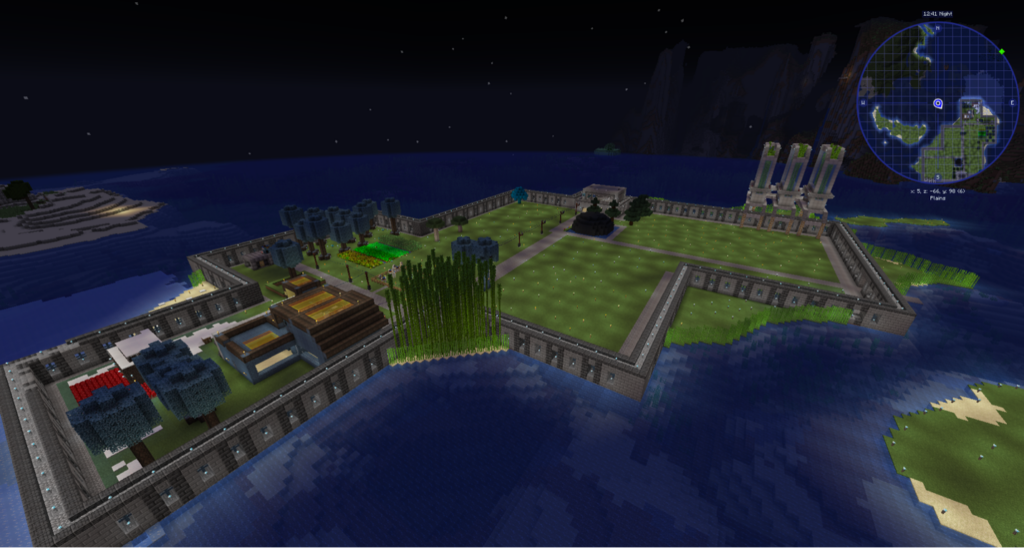
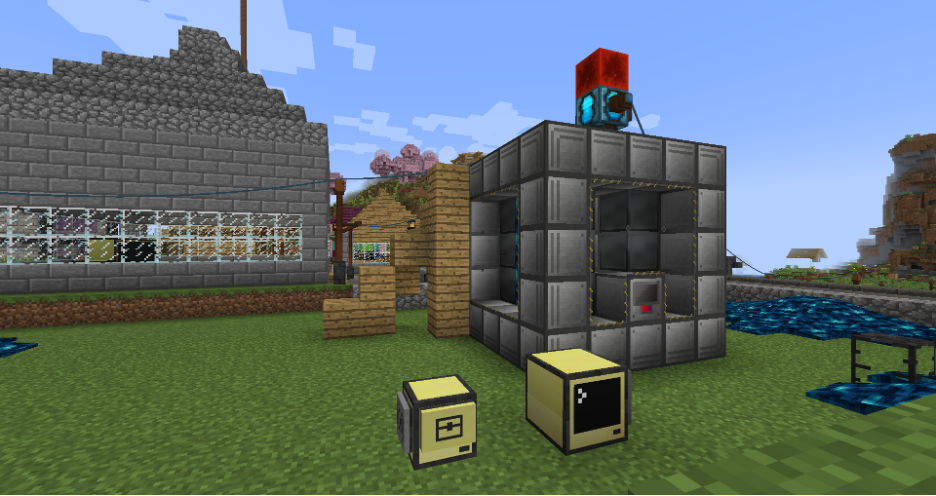
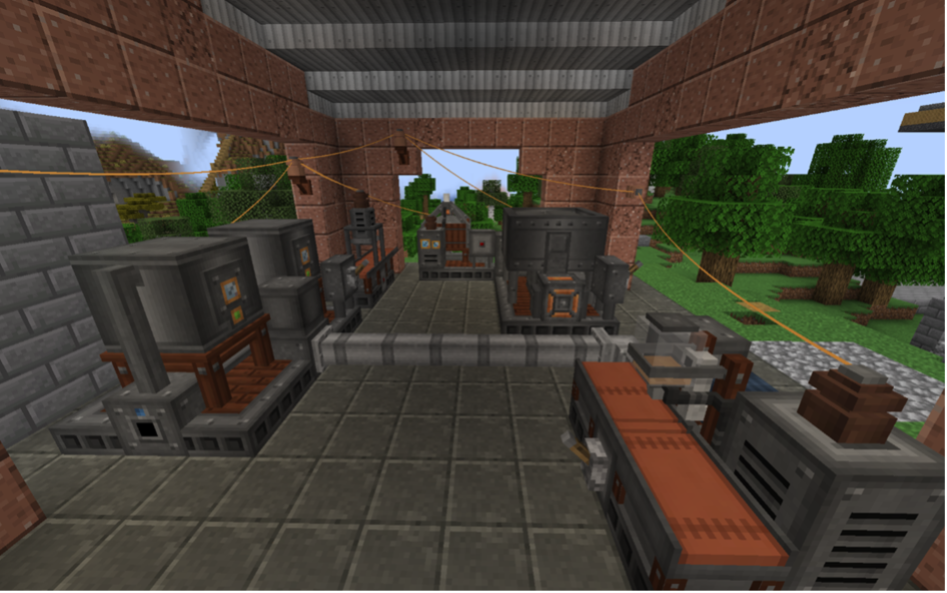
Green City Development Camp: The day centered on electrical energy. We discussed the entire process of production, transmission, storage, and consumption. Within the game, the children built generators, transformers, motors, utility poles, and wiring—then began setting up the electrical distribution center. This laid the foundation for the complete electrical infrastructure.
Naturally, the spirit of sustainability followed the camp throughout; thus, minimizing environmental damage was a key priority. Similar to our previous camps, the “If you cut down one tree, you must plant two in its place” policy was in effect and proved very popular.
Basics of programming in the Minecraft world camp: Here, the day was spent with programmable “turtle” robots. The children learned the commands necessary for controlling movement, created functions, and used loops. The more enthusiastic participants even began programming wireless communication for the turtles, while others—similar to the energy camp—built their own electrical networks and power plants.
By programming the turtles, they gained a simplified view of developing remote-controlled systems, smart home controls, and industrial robot programming.
A special day in both camps: we celebrated the birthdays of two children with a spectacular “virtual” cake, in-game fireworks, and music.
Green City Development camp: The day’s curriculum focused on the operation of solar panels and the structure of urban networks. In the virtual space, they built solar systems, batteries, and street lighting, and further developed the factory built on the previous day.
Basics of Programming in the Minecraft World Camp: After finishing the turtle programming, we listened to guest speaker Prof. Dr. Kristóf Fenyvesi, and during an afternoon event, the children were allowed to “attack” the camp instructors within the game. At the end of the day, we held an interactive lecture on artificial intelligence and industrial automation, which was not only interesting but also closely related to the camp’s theme.
The day began with a visit to Óbuda University’s IT Evolution exhibition, where the children learned about the roles of electricity and information technology in everyday life through real-world examples. Afterward, both camps returned to the virtual space to complete their remaining tasks.
As a conclusion to the week, after finishing their tasks, the two camps moved to a shared server. The final mission was to defeat the Ender Dragon, the primary goal of the game. Forming one big team, the campers successfully defeated the dragon, freeing the world of Minecraft from evil and providing a worthy conclusion to a week full of knowledge and experiences.
Thank you to all participants and helpers!
Green City Development camp:
Basics of programming in the Minecraft world camp:
On February 5, 2025, Obuda University participated in the "Safer Internet Day"... read more
The Obuda University STEAM Office has once again enriched the lives of... read more
On October 13, 2025, the opening ceremony of the 2025/26 academic year... read more
The costs of the training were financed by Obuda University from the... read more
A student team from Óbuda University—Luca Pete and Dániel Lenkei—achieved an outstanding... read more
Our STEM Excellence Program is implemented with the funding of the National... read more
Zoltán Márton visited the Weöres Sándor Primary and Elementary Art School in... read more
Companies, experts, educators and students met at the International STEAM Festival, this... read more
Nelson Mandela’s words are timeless: "Education is the most powerful weapon which... read more
At the end of September, Zoltán Márton, Project Coordinator, representing the Obuda... read more